Nombre total de pages vues

mercredi 7 septembre 2022

WILLIE DIXON/ 1952-62


WILLIE DIXON


I guess it's no use to present Willie Dixon (1915-1992) to most of this blog's followers who are, for the most part, hardcore blues buffs!

            Singer and bassist, sometimes guitarist, Willie is above all renown for being the composer, producer and arranger of some of the most brilliant blues classic tunes and sessions of the postwar years. And his compositions can be read like a who's who of the greatest blues numbers ever when sung and played by Muddy Waters, Howlin' Wolf, Otis Rush, Koko Taylor etc...

            As a performer, Willie was very often a little bit too much sententious and corny. His deep voice could be particularly striking sometimes but seemed without enough range otherwise.

            Well, this is certainly not to belittle the greatness of some Willie Dixon's albums, particularly during the 1970's, like Peace?, Catalyst or Earthquake and hurricane which should be in all blues collections. Or the excellent albums he made with his Chicago Blues All Stars that gathered blues giants like Big Walter Horton, Johnny Shines, Sunnyland Slim...


In fact, Willie started his career with Leonard Caston's Big Three Trio, a group of guitar, piano and bass with shared singing parts. They recorded prolifically during the late 1940's and early 50's in a jazz/blues/pop style. Many of the songs that would become Dixon's blues classics were recorded first with the Big Three Trio in a way very different that it would be later on. Those Big Three Trio have been heavily reissued, so we have only kept an example with the first version of My blues will never die which would become a striking, moving masterpiece by Otis Rush.

            We have then gathered all the recordings Willie made for different labels during the next decade (1952-62) that were hard to find and scattered in a lot of compilations, most of them being unavailable today.

                                                                       Gérard HERZHAFT


Willie Dixon, vcl/bs; Leonard Caston, pno; Bernardo Dennis, g. Chicago, Ill. 16 june 1952

01. My love will never die

Willie Dixon, vcl/bs; Harold Ashby, t-sax; band. Chicago, Ill. 17 february 1954

02. Wang dang doodle

03. So easy

Willie Dixon, vcl/bs; Leonard Caston, vcls; Ollie Crawford, g/vcls; Harold Ashby, y-sax; Lafayette Leake, pno; Al Duncan, dms. Chicago, Ill. october 1954

04. Violent love

Willie Dixon, vcl/bs; Harold Ashby, t-sax;  t-sax; Lafayette Leake, pno; Fred Below, dms. Chicago, Ill. may 1955

05. If you're mine

06. Alone

Willie Dixon, vcl/bs; t-sax; Lafayette Leake, pno; Fred Below, dms. Chicago, Ill. july 1955

07. Walking the blues

Willie Dixon, vcl/bs; Harold Ashby, t-sax;  t-sax; Lafayette Leake, pno; Ollie Crawford, g/vcls; Fred Below, dms. Chicago, Ill. november 1955

08. Crazy for my baby

09. The pain in my heart

10. I'm the lover man

Willie Dixon, vcl/bs; Harold Ashby, t-sax;  t-sax; Lafayette Leake, pno; Al Duncan, dms. Chicago, Ill. 27 july 1956

11. Twenty nine ways to my baby's door

Willie Dixon, vcl/bs; Jody Williams, g; dms. Chicago, Ill. april 1957

12. Firey love

13. All the time

Willie Dixon, vcl/bs; Champion Jack Dupree, pno. New York City, 1958

14. Could I would I?

15. Ugly girls

Willie Dixon, vcl/bs; Memphis Slim, pno; Wally Richardson, g; Harold Ashby, t-sax; Gus Johnson, dms. Englewood Cliffs, NJ. 3 december 1959

16. Built for comfort

17. Don't tell nobody

18. Go easy

19. Good understanding

20. I got a razor

21. Move me

22. Nervous

23. Sittin' and cryin' the blues

24. Slim's thing

25. That's all I want baby

26. That's my baby

27. Youth to you

Willie Dixon, vcl/bs; Memphis Slim, pno/vcls. Los Angeles, Ca. 5 january 1960

28. Rub my root

29. Home to mama

30. Shaky

31. One more time

32. Now howdy

Willie Dixon, vcl/bs; Lafayette Leake, pno; Clifton James, dms. Chicago, Ill. june 1962

33. Back home in Indiana

34. Wrinkles

Willie Dixon, vcl; J.T. Brown, t-sax; Hubert Sumlin, g; Johnny Jones, pno; Jerome Arnold, bs; Junior Blackmon, dms. Chicago, Ill. 28 september 1962

35. Tail dragger


samedi 27 août 2022

PEE WEE CRAYTON/ 1960-1973


PEE WEE CRAYTON/ 1960-73


          If the recordings from the late 1940's and 1950's by one of the master of the Texas-California guitar blues style, Pee Wee Crayton have been well reissued and are generally still easily available, it's not the case of his later works, whether his last 45s from the 60's or his 1970's albums from his "rediscovery" years.


Connie Curtis (aka Pee Wee) Crayton was born 18th December 1914 at Liberty Hill (Texas) not far from Austin where his family moved while he was a child. In 1935, Pee Wee Crayton moved to Los Angeles and then Oakland where he worked in the local shipyards. Largely inspired by T-Bone Walker and John Collins, Nat King Cole's guitarist, Crayton started to play guitar in local clubs while he was still learning his instrument. He recorded his first 78's in 1948, hitting instantly with instrumentals like Blues after hours and Texas hop. After that, Crayton recorded prolifically during the 1950's for a lot of West Coast based labels like Capitol, Aladdin, Imperial (sessions in New Orleans with Dave Bartholomew's band). During this decade, Pee Wee crafted his own guitar style, being one of the top West Coast blues guitarist. He also handled nicely blues vocals with a smooth and smoky voice that pleased to his female audiences.

            But the 1960's were lean years for all the West Coast bluesmen, their style seeming a little bit old fashioned for the young African American audience and too sophisticated for the fledgling blues revival audiences all over the world much more enthralled on the raw Delta and Chicago blues. Pee Wee managed to record for small labels with low distribution and small sales like Jamie, Guyden, Edco or Smash but had to make a living out of music. Happily, in the late 60's, Johnny Otis took Pee Wee in his "Johnny Otis Show" a band of veterans R&B stars. He then resumed his career, appearing in major jazz and blues festivals like Monterey's. And recorded several albums that opened him the gates of the European scenes.

            Pee Wee Crayton died on 25 of June 1985 in Los Angeles.

           
We have gathered all his early 60's tracks (minus one that we were unable to find) plus his two LP's from the early 70's.

                                                           Gérard HERZHAFT


PEE WEE CRAYTON/ 1960-73

Pee Wee Crayton, vcl/g; band. Los Angeles, C. 2 june 1960

01. Money is all we need

02. Mistreated so bad

03. Twinky

04. Blue night

05. Mojo's blues

06. Need your love so bad

07. All or nothing at all (vcl: Esther Clayton)

Pee Wee Crayton, vcl/g; band; Evelyn Freeman Singers, vcls. Los Angeles, Ca. may 1961

08. I'm still in love with you (Guyden)

09. Time on my hands

10. Tain't nobody's business if I do

11. Little bitty things

Pee Wee Crayton, vcl/g; H.A. Blackwell Orchestra. Los Angeles, Ca. 24 may 1962

12. Git to gettin'

13. Hillbilly blues

Pee Wee Crayton, vcl/g; band. Los Angeles, Ca. february 1962

14. Money tree

When darkness falls

Pee Wee Crayton, vcl/g; Gerald Wilson, pno; Jackie Kelso, t-sax; John Collins, tb; bs; Lee Young, dms. Los Angeles, Ca. 1964

15. Baby won't you please

16. Blues after dark

17. Good rocking tonight

18. Got my mojo working

19. How long blues

20. I've got news for you

21. Kansas City

22. Piney Brown blues

23. Stormy monday

24. Tain't nobody's business

Pee Wee Crayton, vcl/g; Larry Nash, pno; Lloyd Rowe, g; Ben Brown, bs; Robert Lee Dupree, dms. Los Angeles, Ca. 17 august 1970

25. Every night

26. But on the other hand

27. Peace of mind

28. Let the good times roll

29. Blues after hours

30. You were wrong

31. Things I used to do

32. Little bitty things

33. S.K. blues

34. Long tall Texan

35. My kind of woman

Pee Wee Crayton, vcl/g; Zaven Jambazian, hca; Hamilton Spotts, vb/pno; Leon Haywood, pno; Shuggie Otis, bs/g*; Johnny Otis, dms. Los Angeles, Ca. 11 july 1973

36. Don't forget to close the door

37. If I ever get lucky

38. Blues after hours*

39. Lucille

40. Need your love so bad

41. In the evening*

Pee Wee Crayton, vcl/g; Gene Connors, tb; Jackie Kelso, t-sax; Clifford Solomon, t-sax; Big Jim Wynn, b-sax; Johnny Otis, kbds; Shuggie Otis, bs/g; Johnny Otis, dms. Los Angeles, Ca. 12 july 1973

42. Texas hop

43. Blues in the ghetto

44. Lou Ella Brown

45. My baby's on the line


mardi 19 juillet 2022

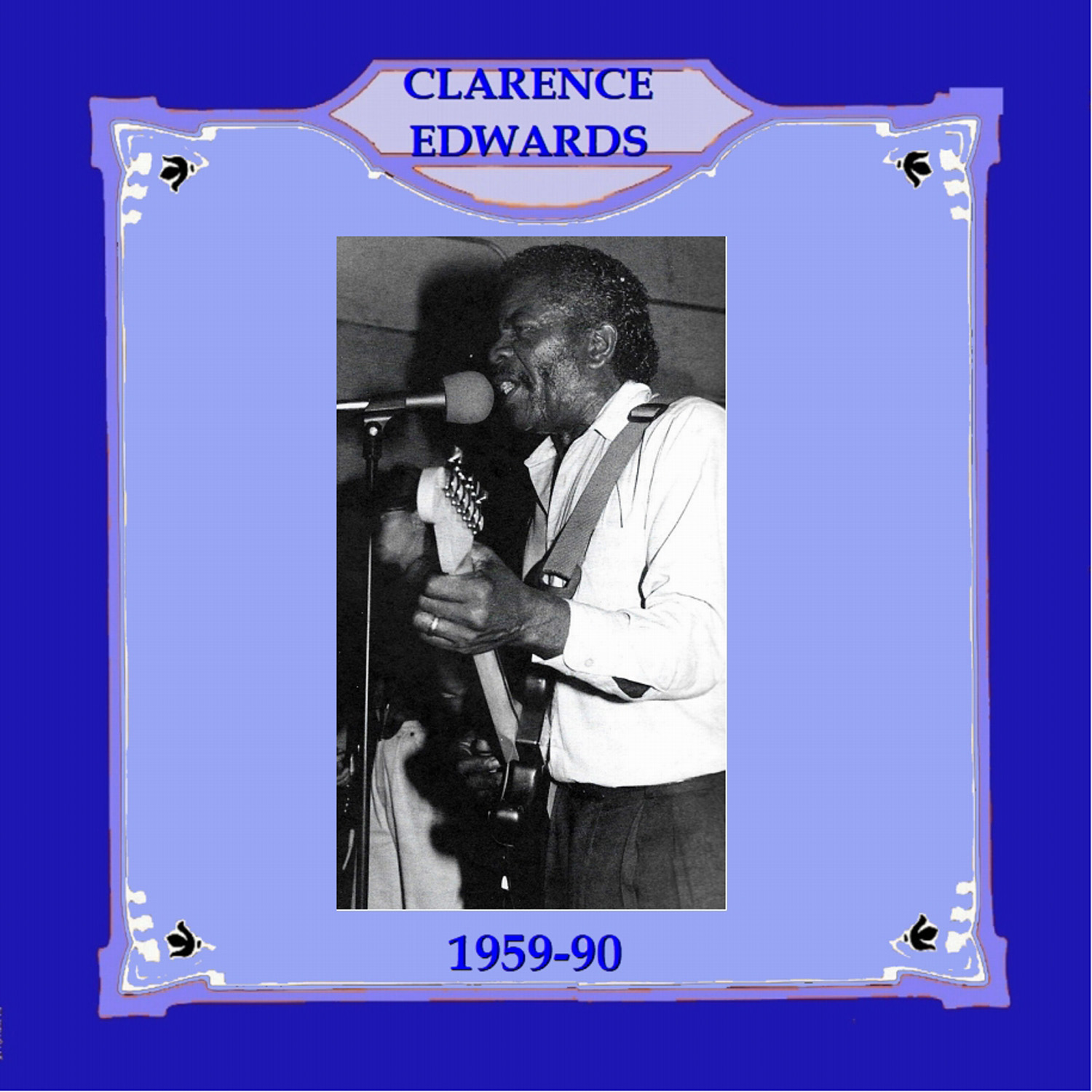
CLARENCE EDWARDS/ 1959-90


CLARENCE EDWARDS/ 1959-90


Although he never recorded for Jay Miller, Khoury, Shuler or any louisiana producers, Clarence Edwards was anyway a major exponent of the so-called Swamp blues as well as a fine acoustic traditional louisiana musician.

            Clarence was born on 25d of March 1933 in Lindsay (La). He became interested in music through records of Charlie Patton, Blind Lemon Jefferson and Howlin' Wolf and became a good guitarist in following those records. Never a professional musician (he made a living working on a Baton Rouge scrap yard for over than 30 years) he nevertheless played constantly in week ends since the early 1950's with several local louisiana bands like The Boogie Beats or The Bluebird Kings. While playing as a combo with Butch Cage, his brother Cornelius Edwards and Willie Thomas around the small town of Zachary, Edwards was "discovered" by folklorist Harry Oster in 1959 who recorded a good amount of blues and Zydeco acoustic tracks by Edwards on several sessions.

            But Clarence had to wait until 1970 when researcher Terry Pattison was in charge by the rejuvenated Excello label to record the remaining Swamp blues musicians still playing around Baton Rouge. Edwards was featured on the anthology playing alone as well as with a band and even a 45 was issued from those sessions. He also was captured live for another Excello album.

            Although those albums gained very good critics from Europe, nothing appeared for Clarence in the US. And it was almost by chance that in 1990 bassist, bandleader (Short Fuse) and producer Steve Coleridge stumbled on Clarence while he was playing in a Louisiana club. Very aware of the strong musical potential Clarence had, Coleridge recorded him during a mammoth session that was issued on several albums on European labels, getting rave reviews from European magazines. Clarence Edwards had thus plans to tour Europe when he suffered an infection that caused his death on 20 may 1993 in Baton Rouge.

            We have gathered here all his early sides that were scattered on several anthologies as well as some of his 1990's tracks. The remainder is easily available on the Wolf label. We have also not included his several live sessions in front of an audience.

                                                                                   Gérard HERZHAFT


CLARENCE EDWARDS 1959-1990

Clarence Edwards, vcl/g; Butch Cage, fdl; Cornelius Edwards, g. Zachary, La. 27 october 1959

01. You don't love me

02. Smokestack lightning

03. Stack o'dollars

04. Man old Frisco

05. Miss Sadie May

06. Stagolee

07. I can't quit you baby

08. This is my life

09. Goin' back to New Orleans

10. Thousand miles from nowhere

Clarence Edwards, vcl/g; Butch Cage, fdl. Zachary, La. 30 june 1961

11. Awful blue

12. Come on baby don't you want to go?

13. I got a coal black mare

14. Can't stand to be your dog

Clarence Edwards, vcl/g; Henry Gray, pno; Clarence Prophet, bs; Samuel Hogan, dms. Baton Rouge, La. 13 august 1970

15. Lonesome bedroom blues

16. Let me love you baby

Clarence Edwards, vcl/g. Baton Rouge, La. 15 august 1970

17. Cooling board

18. I want somebody

Clarence Edwards, vcl/g; Harmonica Red, hca; Henry Gray, pno; Michael Ward, fdl; A.G. Hardesty, bs; Rick Delmore, dms; Steve Coleridge, perc. Baton Rouge, La. 14-15 february 1990

19. Lonesome bedroom blues

20. Rocky Mountains

21. She moves me

22. Still a fool

23. Stoop down baby

24. Things I used to do

25. 24 hours of the day

26. Born with the blues

27. Chewing gum

28. Coal black mare

29. Done got over it

30. Driving wheel

31. Hi heel sneakers

32. Hoochie coochie man

33. I want somebody

34. I'm the one

35. I'm your slave

36. Jody

37. Let me love you

38. Lonely lonely nights

39. Tried so hard

40. Walking the dog

41. Will the circle be unbroken


dimanche 17 juillet 2022

BROTHER WILL HAIRSTON/ Complete Recordings

 BROTHER WILL HAIRSTON/ Complete Recordings (revised and updated)

Detroit Blues Masters Vol. 11

           
Ce 11ème volume sur Detroit est consacré au magnifique compositeur et chanteur de Gospels, Brother Will Hairston.
            Will Hairston naît le 22 novembre 1919 à Brookfield (Ms) d'une famille de pauvres fermiers et, très jeune, chante dans la congrégation de ses parents. Vers 1938, il part à Saint Louis, puis est mobilisé et à son retour de la guerre en 1945, se marie avec Ms Willie et s'installe à Detroit où il travaille chez Chrysler afin d'entretenir sa famille qui comptera 10 enfants. Très religieux, Will Hairston s'impose dans son Eglise par sa voix qui lui vaudra le surnom de "Hurricane of the Motor City", tellement il est capable de soulever d'enthousiasme ses paroissiens par ses sermons qui reprennent souvent l'actualité tumultueuse de l'Amérique Noire.
            Pour répondre à une forte demande, il enregistre lui-même My God don't like it à propos du jeune Emmet Till, un adolescent noir de 14 ans massacré en octobre 1955 dans sa ville de Money (Mississippi) parce qu'il avait crié "Bye baby" à une jeune fille blanche! La photo de son corps mutilé reproduit dans de nombreux journaux avait alors soulevé l'indignation dans toute l'Amérique. En même temps, Brother Will enregistre aussi deux titres (Let him come in; Ain't nobody there but Brother Will que je n'ai pas réussi à me procurer).
            Hairston vend ses disques depuis son camion (acheté pour transporter sa nombreuse famille) sur lequel il a installé des hauts parleurs qui diffusent sa musique tandis qu'il parcourt le ghetto noir de Detroit!
Joe Von Battle's record shop. Photo©Jacques Demêtre 
            Le succès est tel que le producteur et disquaire Joe Von Battle (qui a joué un rôle considérable dans le Detroit blues) lui fait enregistrer une magnifique séance qui comprend le puissant Alabama Bus, premier morceau consacré à la longue grève des autobus de Montgomery (Alabama) à la suite du refus de la militante noire Rosa Parks de céder sa place à un blanc et qui aboutira à la première brèche dans la ségrégation qui sévissait dans les Etats du Sud depuis les années 1870-80. Alabama bus est aussi le premier disque qui mentionne le nom de Martin Luther King Jr.
            Les années suivantes, Brother Will continuera à enregistrer dans cette veine, entre Gospel et protest songs, notamment Shout, school children sur la première tentative de déségrégation des écoles blanches de l'Arkansas; The story of President Kennedy sur l'assassinat de JFK à Dallas; Reverend King had a hard time après l'assassinat de Martin Luther King Jr en 1968.
            Lui-même victime d'une tentative d'assassinat qui le laisse très affaibli, Will Hairston prend sa retraite de chez Chrysler en 1970 et se consacre entièrement à sa congrégation, le Greater Love Tabernacle Church avec laquelle il enregistrera une poignée de titres en 1972.
            Brother Will Hairston décède à Detroit le 7 mars 1988, laissant une oeuvre superbe et vibrante qui malheureusement - et à l'exception d'une poignée de titres - était très difficile à trouver. Nous avons ajouté ici le seul titre enregistré en 1957 pour Brother Will par son ami le Reverend Reuben Henry.
            Nos plus vifs remerciements à Pierre Monnery et Justin Brummer sans lesquels cette compilation n'aurait pu voir le jour. Ainsi qu'à Guido Van Rijn dont l'article sur Brother Will dans le magazine britannique Blues & Rhythm #167 a largement servi à écrire cet article.
                                                                       Gérard HERZHAFT

            This 11th Volume of our Detroit blues series is entirely dedicated to the great Gospel singer and composer Brother Will Hairston.
            Will Hairston was born 22 November 1919 at Brookfield (Ms) in a very poor faming family. At an early age, he sings in his parents' church, goes to Saint Louis for better job opportunity during the 1930's, is drafted and after the war, settles in Detroit, having a secure job at the big Chrysler's plant and marrying the young Willie with whom he'd have ten children.
            A very religious man, Brother Will Hairston gains the nickname of "The Hurricane of the Motor City" for his capacity to spark enthusiasm among the faithful of his church with a strong voice and his sermons that very often reflect his own views about the situation of African-Americans.
            To cope with strong requests, Mr Hairston records himself his first session with the striking  My God don't like it about the slaughter of the young Black teenager Emmet Till in his hometown of Money (Ms) after he had shouted a "Bye baby" to a white girl. The photos of the mutilated corpse published in several magazines had raised a wave of indignation throughout the USA. Two other titles were recorded the same day (Let him come in; Ain't nobody there but Brother Will) that I unfortunately wasn't able to get a copy.
            Brother Will Hairston sells his records from his own truck while a sound system he had hooked on the roof of his vehicle blasts the music when he is driving around!
            Such is the success of Brother Will that the record producer and dealer Joe Von Battle (who of course played a major role in the Detroit blues scene) brings Hairston in his studios for an historical and magnificent 1956 session with the powerful hit Alabama Bus, the very first song about the Montgomery (Al) bus strike after Rosa Parks refused to give up her seat to a white man, like she should have done according to the segregation laws. Alabama bus is also the very first song mentioning Martin Luther King Jr.
            The following decade, Hairston will continue to record in this Gospel/ protest song vein, notably Shout, school children about Little Rock Central High events, forcing the integration of some black school children in a only white school; The Story of President Kennedy about the murder of JFK; Reverend King had a hard time just after the assassination of Martin Luther King Jr.
            Brother Will is himself the victim of a shooting and retires from Chrysler in 1970, focusing entirely to his family and his Greater Love Tabernacle Church with which he records a last session in 1972.
            Brother Will Hairston dies in Detroit 7 March 1988, leaving a vibrant, powerful and largely remarkable recording works that are unfortunately - and apart a couple of tracks - very hard to get. We have herein also  included the sole 1957 record by Rev. Reuben Henry, a close friend to Hairston.
            Our big thanks to Pierre Monnery and Justin Brummer for their invaluable help.
            And a great thank to Guido Van Rijn whose article in the very good British magazine Blues & Rhythm #167 has largely been used to write this article!
                                                                       Gérard Herzhaft


BROTHER WILL HAIRSTON/ Complete Recordings

Brother Will Hairston, vcl; band. Detroit, Mi. décembre 1955

01. My God don't like it I & II

02. Let Him come in

03. Ain't nobody here but Brother Will

Brother Will Hairston, vcl; Louis Jackson, pno; Washboard Willie, wbd. Detroit, Mi. 1956

04. The Alabama Bus I & II

05. Mighty wind

06. The Bible is right

07. Seems like a dream

08. He comes rushing like a mighty wind

Brother Will Hairston, vcl; The Dixie Aires, vcls; band. Detroit, Mi. novembre 1957

09. Shout school children

10. Jesus had a hard time

Brother Will Hairston, vcl;  band. Detroit, Mi. 1964

11. The Story of President Kennedy

12. Holy Ghost don't leave me

13. Shout Brother Shout

Brother Will Hairston, vcl; Rev. Henry, vcl; g; dms. Detroit, Mi. 1964

14. Here comes the Lord

Brother Will Hairston, vcl; Louis Jackson, pno; Washboard Willie, wbd. Detroit, Mi. 1965

15. March on to Montgomery

16. Angels watching over me

Brother Will Hairston, vcl; Louise Jackson, pno or Magnolia Tillman, pno; g; Washboard Willie, wbd. Detroit, Mi. 1968

17. St John

18. Reverend King had a time

19. That's alright

20. The War in Wietnam

21. When I'm gone

Brother Will Hairston, vcl; The Greater Love of Tabernacle, vcls; band. Detroit, Mi. 1972

22. This may be the last time

23. Minny, your dress too short

24. Death knocked at my door, Jesus got the key

Let the church roll on

Reverend Reuben L. Henry, vcl; g; The Dixie Aires, vcls. Detroit, Mi. novembre 1957

25. God's going to ring those freedom bells