Nombre total de pages vues

vendredi 11 août 2023

WILEY & FLASH TERRY/ The Real Blues Brothers.


WILEY & FLASH TERRY/ The Real Blues Brothers 


On peut classer les frères Terry, Wiley et Flash, parmi les grands méconnus du blues. Ils sont pourtant deux remarquables guitaristes qui ont substantiellement enregistré.
            Wiley Terry est surtout réputé pour son single en deux parties Follow the leader, devenu un favori des clubs de danse popcorn, notamment en Europe. Mais on ne savait que très peu de choses sur lui. J'ai eu la chance d'entrer en contact avec sa fille Tamara Leigh Terry qui m'a très aimablement donné davantage de renseignements sur son père et sa famille de musiciens.
            Wiley , né à Inola, une banlieue de Tulsa (Oklahoma) le 10 septembre 1936, a appris très jeune la guitare en même temps que son frère aîné Flash et a été aussi élevé avec Ted Taylor qu'il considérait comme son "frère" et qui, lui, fera une prolifique carrière de chanteur de Soul Blues. Dans nombre de disques de Ted, notamment dans la première partie de son oeuvre, le guitariste lead est Wiley Terry et ses solos sont souvent tranchants, précis et plein de feeling. Wiley a vécu en Floride, à Los Angeles et en Arizona, enregistrant à chaque fois derrière différents chanteurs et plusieurs instrumentaux sous son nom ou avec l'orchestre de Ted Taylor, avant de s'installer à Chicago en 1964. C'est là qu'il grave ses 45t les plus connus pour USA, les remarquables Follow the leaderShake it babyJoker's Wild dance. La maison de Wiley Terry était souvent fréquentée par quantité de bluesmen de Chicago et sa fille se souvient de Howlin' Wolf, Koko Taylor, Willie Mabon, Albert King et bien d'autres... Contacté par James Brown pour faire partie de ses JB's, Wiley a préféré rester à Chicago. Pour des raisons économiques, il a dû ensuite prendre un job de conducteur de poids lourds et a abandonné progressivement la musique, se consacrant avant tout à sa congrégation. Il est décédé à Chicago le 1er mars 2010.
            Tamirah pense qu'il a enregistré bien davantage que les quatre singles que nous lui connaissons. Nous avons inclus ici ses trois 45t pour USA, des extraits seulement de son single 
Wiley Terry & Ted Taylor
californien car, malgré mes efforts, je n'ai pu obtenir une copie décente de ces instrumentaux qui semblent bien juteux...
            Selon Tamirah, Wiley serait aussi le chanteur et guitariste (sa guitare paraît immanquable) des deux titres enregistrés à Los Angeles en 1961 et que le label a attribué à l'inconnu Kid Guitar Thompson, certainement un nom inventé pour la parution des années après d'une séance ensevelie dans les tiroirs! Nous avons inclus ces deux titres qui ne sont en fait que deux prises d'un même morceau.

            Flash Terry (Verbie Gene Terry) est né lui aussi à Inola (Oklahoma) le 17 juin 1934 et a substantiellement enregistré sous son nom à partir de 1958, essentiellement en Californie puis à Tulsa où il est revenu vivre. Il a tourné et enregistré avec Leon Mc Auliffe, Bobby Bland, Bo Diddley, Etta James et bien d'autres avant de, lui aussi, abandonner la musique pour devenir chauffeur d'autocar de la ville de Tulsa. Mais, à sa retraite, il a repris une carrière musicale active, dirigeant un nouveau blues band avec de jeunes musiciens locaux, ce qui lui a permis de tourner en Europe et d'être élu à l'Oklahoma Jazz Hall of Fame. Il est décédé le 18 mars 2003 d'une attaque.
            Merci encore à Tamirah Leigh Terry pour son aide déterminante. Elle est aussi une excellente chanteuse de R&B, de Gospel et de Jazz, a enregistré en studio mais cherche un producteur et un label (https://www.facebook.com/musicsongbird?fref=ts)
                                                                       Gérard HERZHAFT

            The blues brothers Wiley and Flash Terry are largely unknown outside some blues circles although they were remarkable guitar players who recorded some first rate music. Thanks to Wiley's daughter Tamirah Leigh Terry that I had the chance to be in contact with I have been able to document more accurately the career and life of her father.
            Wiley Terry's Follow the leader, a two parts semi instrumental is currently enjoying a great reputation in Europe, particularly in the "popcorn" dance clubs. But he has offered much more.
            Wiley Terry was born in Inola (Oklahoma) on October 9th, 1936, learning the guitar at an early age with his elder brother Flash. The famous Soul blues singer, Tulsa born Ted Taylor was also considered as a "brother" by the Terry Family and Wiley will be several years in the studio and on tour with Ted, delivering concise, precise, bluesy and full of feeling guitar solos on many records. Wiley lived in Arizona, Los Angeles, Florida, doing studio work everywhere. Before settling in Chicago permanently in 1964, where he waxed his two most famous 45t for the USA label (Follow the leader I & IIShake it babyJoker's wild dance). Tamirah remembers many bluesmen coming to the Terry's home: Howlin' Wolf, Koko Taylor, Willie Mabon, Albert King and many more. Wiley was even approached by James Brown to be a member of the JB's but he turned down the offer. Unfortunately, he had to give up his musical career and make a living as a truck driver and centered more his talents for his church. He died in Chicago on March, 1st 2010.
            Tamirah thinks her father recorded much more than the four singles that we know from him. We have included here his three 45s, and just extracts from a single recorded in Los Angeles because, despite my efforts, I have been unable to get a good enough copy of what seem to be very spicy blues guitar instrumentals.
            On the other hand, here is a track (with two takes named differently) that was probably recorded by Wiley in LA in 1961 but issued only years after under the odd nom de disque Kid Guitar Thompson.
            The better known Wiley's elder brother Flash Terry (Verbie Gene Terry) was also born in Inola (Ok) on June, 17th 1934. He made many records under his name and behind others, touring and recording with Bobby Bland, Etta James, Bo Diddley, even Western Swing's veteran Leon Mc Auliffe and many others... He enjoyed some Hits but he too had to gave up music for years and make a more secure living as a bus driver in his hometown of Tulsa. When retired, Flash resumed his musical career, formed a new band with local youngsters, toured Europe and was even elected at the Oklahoma Jazz Hall of Fame. He died from a stroke in Tulsa on March, 18th 2003.
            Thanks again to Tamirah Leigh Terry for her essential help. She is herself an excellent composer and singer who made some studio recordings and who is currently looking for some label and producer. ((https://www.facebook.com/musicsongbird?fref=ts)
                                                           Gérard HERZHAFT

vendredi 28 juillet 2023

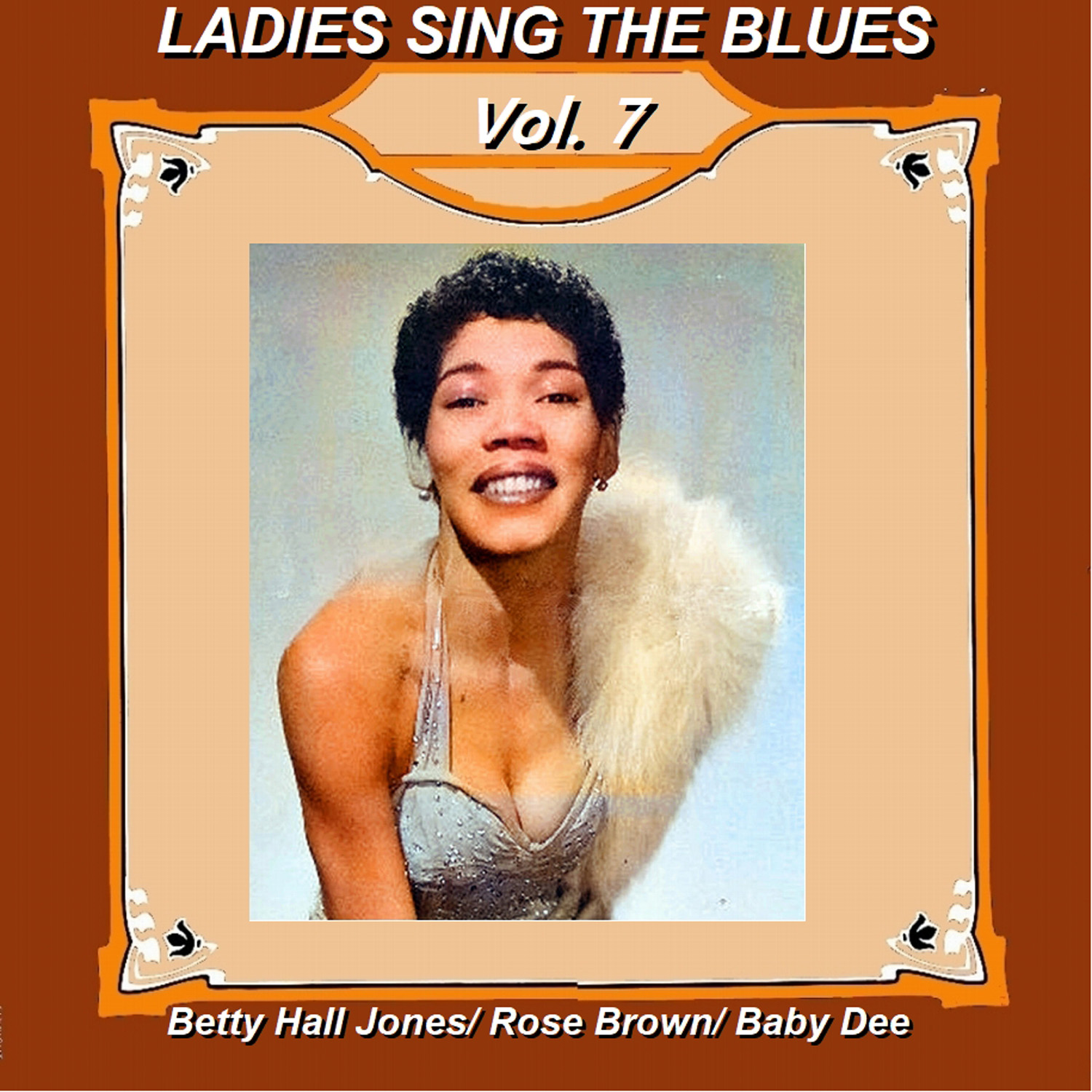
LADIES SING THE BLUES/ Volume 7


LADIES SING THE BLUES/ Volume 7


This 7th Volume of our surprisingly popular series "Ladies sing the blues" opens with the complete recordings of Betty Hall Jones (born Cordell Elizabeth Bigbee in Topeka (Kansas) on 11 January 1911) into a musical family who moved quickly to California where the young girl learned piano and became a proficient blues, boogie and ballad pianist. In 1927 she married banjoist George Hall. As Betty Hall, she began a musical career being the pianist of Buster Moten and then Roy Milton from 1937 to 1941. She joined Luke Jones Orchestra, remarried Jasper Jones, then taking her stage name as Betty Hall Jones. As her reputation as a very good pianist and sometimes singer she then joined Paul Howard and Alton Reed's band, recording a lot with them. She also started her own recording career in 1947 with the Maxwell Davis' band that led her with a contract with the Capitol label, recording and writing songs that would be lifted by none others than Ray Charles or Nellie Lutcher. After Capitol, she recorded quite prolifically for Dootone, Combo and others. Although Betty Hall's records were never "hits", she played a lot of night clubs, hotels, even touring USO in East Asia and even made a comeback in Europe during the 1980's. She died in Torrance (California) in 2009.

            If you want more about this fine musician, go to the Marv Goldberg site

https://www.uncamarvy.com/BettyHallJones/bettyhalljones.html


            I don't know anything about Rose Brown who cut two excellent tracks for the GST label. She shares vocals with a Jimmie Harris and her backing band is the still mysterious "Bubbles"!


            Although she recorded constantly in New York City between 1946 and 1958 nothing much is known about Baby Dee (Dolores or Delores Spriggs) who was another very fine singer. She apparently started as the featured singer with the Bill Campbell band who was quite in demand in night clubs and venues around NYC after WWII. Here are also her complete recordings and more details about this lady blues singer, a category which has been sometimes neglected by most of the blues magazines insofar, would be nice.

    Our friend Marc D. has unearthed some more infos about Baby Dee (see the comments section), particularly an odd album of "risqué" songs produced by Joe Davis named '"Sexarama" under the name Miss Dee. The album is entirely available on You Tube but it's quite far from any blues or R&B genres. 


            Anyway, enjoy the music!


                                                                       Gérard HERZHAFT


BETTY HALL JONES, vcl/pno; Maxwell Davis, t-sax; Buddy Harper, g; Ralph Hamilton, bs; Bob Harvey, dms. Los Angeles, Ca. may 1947

01. Learn to boogie

02. Fine and mellow

03. That same old boogie

04. Make me know it

Betty Hall Jones, vcl/pno; King Porter, tpt; Marshall Royal, a-sax; Bumps Myers, t-sax; Gene Porter, b-sax; Charlie Davis, pno; Gene Phillips, g; Arthur Edwards, bs; Bill Settles, dms. Los Angeles, Ca. 27 december 1947

05. That early morning boogie

Betty Hall Jones, vcl/pno; Henry Coker, tpt; Dave Cavanaugh, t-sax; Bumps Meyers, t-sax; Tiny Webb, g; Ralph Hamilton, bs; Jesse Price, dms. Los Angeles, Ca. 11 february 1949

06. Why can't you love that way

07. This joint's too hip for me

08. If I ever cry

09. You've got to have what it takes

Betty Hall Jones, vcl/pno; Forrest Powell, tpt; Maxwell Davis, t-sax; Tiny Webb, g; Ralph Hamilton, bs; Bob Harvey, dms. Los Angeles, Ca. 2 august 1949

10. I never miss the sunshine

11. That's a man for you

12. Thrill me

13. Buddy stay off the wine

Betty Hall Jones, pno; Her Combo, band. Los Angeles, Ca. september 1952

14. Richmond blues

Betty Hall Jones, vcl/pno; Jake Porter, tpt; band. Los Angeles, Ca. september 1952

15. Goin' back to town

16. Frustration frustration

17. Poor spending daddy

18. Way after hours

Betty Hall Jones, vcl/pno; Gay Cowie, vcls; Bonnie & Linda Cowie (as The Gay-Bon-Lin Trio), vcls; band. Los Angeles, Ca. 1955

19. Love my love

20. Shina no yoru

21. How long blues

22. Is he handsome?

ROSE BROWN, vcl; Jimmie Harris, vcl; Bubbles, t-sax; band. Newark, NJ. 17 mai 1951

23. Back from Korea

24. Rockin' chair woman

BABY DEE (Dolores Spriggs), vcl; Bill Campbell, pno; band. New York City, septembre 1946

25. Boogie me

26. Used to be a daddy

Baby Dee, vcl; Bill Campbell, pno; band. New York City, novembre 1946

27. Look what baby's got for you

28. I want to see my daddy

29. Baby Dee blues

30. Feel it

Baby Dee, vcl; Bill Campbell, pno; band. New York City, mars 1947

31. Like he's never loved me before

32. It feels so doggone good

Baby Dee, vcl; Leroy Kirkland, g; band. New York City, 15 juin 1954

33. Don't live like that no more

34. He ain't mine no more

35. Hold the light for me

Baby Dee, vcl; Charlie Singleton, t-sax; band. New York City, 11 novembre 1954

36. When I cry

37. Stout hearted

Baby Dee, vcl; band. New York City, 23 août 1955

38. Zoom de de Ho Ho

39. I wish you out of my mind

40. Find the one meant for you

41. Unless you love me

Baby Dee, vcl; band. New York City, 1957

42. Pretty eyed baby

43. Sittin' here wondering

Baby Dee, vcl; band. New York City, 1958

44. I cried the last time

45. You don't have to be a fool


lundi 10 juillet 2023

DELTA BLUES/ Volume 2


DELTA BLUES/ Volume 2


Second volume of our Delta Blues series starts with the great underrated Lane Hardin (1897-1975). Born in Kentucky, Hardin made a living mostly outside music, holding a restaurant in Saint Louis or as a longshoreman on the Pacific Coast. He anyway managed to record several times, first in 1935 during an odd Chicago session, then twice in Los Angeles, the 1951 tracks staying unissued until Bruce Bromberg and Frank Scott unearthed them for their classic "Anthology of the blues series". Not really a Delta blues stylist, Lane is nevertheless a great country blues artist who could have made more records if he had been re-discovered on time.


Banjoist and singer Lucius Smith (1881-1980) recorded before and after the war for the Lomaxes, generally with Sid Hemphill (grandfather of Jessie Mae Hemphill). The three tracks here feature him solo. He was a living legend around Senatobia (Ms) when I visited him in 1979.


            John Dudley (c. 1899-1963) recorded only for Lomax while an inmate at Parchman's Penitentiary. His tracks are stunning and he appears as a great traditional Delta blues stylist. He also could have been a major artist if, once free, he would have toured Europe and recorded albums.


Guitarist/singer Miles Pratcher (1895-1964) was also a discovery of Shirley Collins and Alan Lomax. He was a friend and neighbor of Fred McDowell.


W.C. Clay (1927-?) was from Jonestown, a small town in the heart of the Delta. He moved to Helena (Ark) where he became a member of the famous King Biscuit Show alongside Sonny Boy Williamson/Rice Miller. He was also recorded later in life by researcher Louis Guida (cf: Living Blues # 32)


            Most of the datas come from the essential Blues/ A Regional experience (Bob Eagle & Eric LeBlanc). And a lot of thanks too to Lomax Digital Archive.


                                                           Gérard HERZHAFT


Lane Hardin, vcl/g. Chicago, Ill. 28 juillet 1935

01. Hard time blues

02. California Desert blues

Lane Hardin, vcl/g; bs. Los Angeles, Ca. 1949

03. Cartey blues

Lane Hardin, vcl/g. Los Angeles, Ca. 1951

04. Keep'em down

05. I'll be glad when you're dead

Lucius Smith, vcl/bjo. Senatobia, Ms. 22 septembre 1959

06. Goodbye honey

07. Lulu behave yourself

08. Memphis blues

John Dudley, vcl/g. Parchman, Ms. octobre 1959

09. Big road blues

10. Clarksdale Mill blues I

11. Clarksdale Mill blues II

12. Cool drink of water I

13. Cool drink of water II

14. I'm gonna move to Kansas City

15. Interview

16. Po' boy blues

17. You got a mean disposition

Miles Pratcher, vcl/g; Bob Pratcher, fdl/vcls. Como, Ms. 21 septembre 1959

18. Bill Bailey

19. Buttermilk

20. If it's all night long

21. I'm gonna live anyhow

22. Joe Turner

23. Old hen cackle

W.C. Clay, vcl/g. Elaine, Ak. 23 mai 1976

24. King biscuit time I & II

25. Keep it to yourself

26. Someday baby blues

27. Standing at my window

28. What'd I say?


samedi 8 juillet 2023

DELTA BLUES Volume 1/ Anthology of the blues


DELTA BLUES/ Anthology of the blues


DELTA BLUES/ Anthology of the Blues


           Tous les amateurs de blues du monde entier ont une affection particulière pour la région du Delta. Bien que personne nulle part n'en ait jamais apporté le moindre début de preuve - le blues ne serait-il pas bien davantage né parmi les songsters des medicine shows? -, le Delta passe pour avoir été le berceau du blues. Il s'agit d'une bande de terre située au sud de Memphis, entre le fleuve Mississippi et la rivière Yazoo. Ce territoire, paysage plat et désolé sauf dans le nord collineux, espèce de petite plaine alluviale soumise jadis à tous les caprices du fleuve, possède une atmosphère indéfinissable qui a frappé tous les visiteurs. On y hume des odeurs exotiques et épicées, proches de certains fonds des îles Caraïbes les plus reculées. Le blues semble baigner l'atmosphère des campagnes et des bourgades.
           Le Delta blues est généralement rythmique, lancinant, hypnotique avec une figure de basse répétitive, souvent sur un seul accord décomposé en boucle. Très peu de ligne mélodique pour des textes singuliers et évocateurs. Plus qu'une histoire bien construite, le bluesman du Delta enfile des "versets flottants", tissant une trame poétique irrésistible. Cela confère à ce type de blues une qualité "ethnique" considérable qui a fasciné des générations de musiciens et d'amateurs. Il faut aussi noter que, même sur un territoire limité comme le Delta, l'unité de style est largement battue en brèche par des particularismes locaux importants. Le Nord de la région, Hill County, a donné naissance à un blues encore plus rythmique et encore moins mélodique avec, d'évidentes survivances des musiques Cherokees (le Delta était un territoire indien jusque dans les années 1880!). Dans la région de Bentonia, c'est un autre type de blues qui a vu le jour, presque entièrement joué en mode mineur, avec une ligne mélodique plus prononcée. On note aussi, dans les premiers enregistrements en provenance du Delta, l'existence de songsters, très influencés par l'old Time Music des nombreux immigrants Scots-Irish adeptes d'un fingerpicking régulier et d'un répertoire presque entièrement composé de folk songs et de pièces du Music Hall: Mississippi John Hurt, Joe Callicott et même, sur certains titres, Charlie Patton!...
          
Napoleon Strickland (né le 1er octobre 1919 à Como (Ms)- † le 21 juillet 2001 à Senatobia (Ms)) est surtout connu pour avoir dirigé un des principaux "fife and drum bands", sortes d'orchestres sans cordes, tambours et flutes, comme on en trouve aussi beaucoup dans les communautés amérindiennes d'Amérique Centrale et du Sud. Mais il était aussi un excellent harmoniciste et guitariste fort influencé par son excellent voisin et ami Fred Mc Dowell. Les titres présentés ici sont pour la plupart inédits et permettent d'apprécier la variété des talents de cet important bluesman du Delta.       

Belton Sutherland (né le 14 février 1909 à Holmes (Ms) - † le 7 octobre 1983 à Camden (Ms)) est un excellent bluesman qui n'a malheureusement été que brièvement enregistré chez lui en 1978.
           Enfin, Avery Brady, né le 25 août 1912 autour de Clarksdale (Ms) a connu plusieurs grands créateurs du Delta blues, en particulier Charlie Patton avant de venir travailler à Chicago durant la guerre. Il n'a jamais été un musicien professionnel, ne jouant que pour ses amis et voisins. Découvert par Pete Welding, Brady a pu démontrer son jeu de guitare original (Poor Kennedy par exemple avec un doigté sur la gamme de Do) et sa capacité à composer des blues originaux tout en restant ancrés dans la tradition. Il avait certainement le potentiel d'enregistrer davantage et de se produire dans les festivals. Il est décédé à Chicago le 4 février 1977.
                                                      Gérard HERZHAFT


           Every blues (and Rock) fan all over the world owes something to the "Delta blues". The Delta - without real evidence in fact - pass often for the true birthplace of the blues. The Delta is a region lately included inside the State of Mississippi, just South of Memphis, where the Mississippi and the Yazoo River form more or less the letter Δ. This territory was for a long time very isolated, frequently flooded and considered unsuitable for cultivation and thus left to the Cherokees and the Choctaws. The Delta was in fact an Indian territory until the 1880's when the new technologies opened it to colonization from other States and transformed this inhospitable land in a rich and fertile ground. The Native Americans were soon considered "colored" people and melted with numerous African Americans who came to work in the fields. And the music itself is the result of those mixed influences.
           The Delta blues is generally rhythmical with very often a modal construction, hypnotic bass figures, floating verses... a music that remains in your head. But of course, even on a limited territory like the Delta, there was much more than one style of blues: if the North Hill Country fits quite well with the aforementioned description, the so called "Bentonia style" is quite different, more melodic. And since the very beginning, recordings coming from this area featured many songsters with a nimble fingerpicking like Mississippi John Hurt, strongly influenced by the music of the many Scots-Irish fiddlers and such who came there from Ulster during the XIXth Century.
           Napoleon Strickland (1st October 1919, Como, Ms - † 21st July 2001, Senatobia, Ms) is mostly known for the recordings he made with his fife and drum band, an ensemble without strings very similar of bands found in Central and South America among Native Americans. Several of those bands were still playing into the 1960's in remote Southern areas. But Napoleon was also a very fine singer, harmonica and guitar player strongly influenced by his neighbour Fred Mc Dowell as can be appreciated here on those mostly unissued titles.
          
Belton Sutherland (14 February 1909 in Holmes, Ms - † 7th October 1983, Camden, Ms) is quite an excellent Delta bluesman who has only been briefly recorded at home.
           Avery Brady, born August, 25th, 1912 around Clarksdale met and knew several "Delta blues founders" like Charlie Patton before going to Chicago for better job opportunities during the war years. Never a professional musician, Brady played mostly for friends and neighbours. He nevertheless was a very original guitar player (Poor Kennedy for instance) and blues composer and was discovered and recorded by Pete Welding in Chicago in the mid-60's. He certainly had much more to give but never found again the path of the studios or the festival stages and died, mostly unknown, in Chicago on February, 4th, 1977.
                                                      Gérard HERZHAFT

NAPOLEON STRICKLAND, vcl/g/hca/d-bow. Como, Ms. 29 août 1978
01. Baby please don't go
02. Black Mattie
03. Diddley Bow medley
04. Louise
05. Rock me all night long
06. Sitting on top of the world
07. Woke up this morning
Napoleon Strickland, vcl/hca. Como, Ms. 20 octobre 1980
08. Banty rooster
09. Cryin' won't make me stay
BELTON SUTHERLAND, vcl/g. Canton, Ms. 3 septembre 1978
10. Belton's blues
11. Got a sleeping
12. I have trouble
13. Kill the old grey mule
AVERY BRADY, vcl/g. Chicago, Ill. 15 may 1964
14. Bad weather
15. City of New Orleans
16. Gangster blues
17. I have a woman
Avery Brady, vcl/g. Chicago, Ill. 5 june 1964
18. Poor Kennedy I
19. Poor Kennedy II
20. Bad weather blues
Avery Brady, vcl/g. Chicago, Ill. march 1965
21. Let me drive your Ford
22. I don't want you no more
23. Gonna let you down
24. Goin' home with my baby
25. Uncle Sam's own ship

mardi 20 juin 2023

SAM BAKER/ NASHVILLE SOUL BLUES

 SAM BAKER: NASHVILLE SOUL BLUES


 Bien qu'il jouisse à juste titre d'une grosse réputation dans certains cercles férus de Soul, Sam Baker n'a jamais réussi à se faire connaître au-delà. Trop Soul pour les amateurs de blues, trop blues pour les tenants d'une Soul plus commerciale?
            Quoi qu'il en soit, Sam Baker a gravé dans les années 1960 une série de superbes 45t qui révèlent un chanteur expressif et vibrant, un ténor qui utilise fréquemment et pour le meilleur des effets de falsetto. Son oeuvre prend place parmi les meilleurs moments de la scène R&B de Nashville.
            Né à Jackson, Ms, le 14 juin 1941 Baker est très jeune passionné par la musique, chante dans plusieurs orchestres locaux, côtoie Jimmy Reed et Clyde Mc Phatter. Il enregistre un seul 45t à Jackson sur un obscur petit label local. Malgré la présence d'un beau blues Crazy about you baby, le disque demeure confidentiel et Baker décide de gagner Nashville pour y tenter sa chance.
            Il semble devenir assez vite une figure familière des clubs de la ville puisque le D.J. Hoss Allen (qui produit ce qui est peut-être la première émission TV de R&B noir The !!!Beat) lui fait enregistrer trois 45t dont une magistrale version de Sweet little angel. Après une séance à Miami, durant une tournée que Sam effectue en Floride, c'est le producteur John Richbourg, un des personnages clés de la scène du R&B de Nashville, qui, considérant que Baker a le potentiel de devenir une vedette, le fait signer pour son label Sound Stage Seven. Hélas, malgré l'excellence des séances enregistrées entre 1966 et 1969 (dont une à Memphis dans les studios Stax), Sam Baker ne connaît qu'un succès d'estime local et son contrat n'est plus renouvelé après 1969. Sam Baker quitte même Nashville dans les années 1970 pour retourner à Jackson où il s'occupera un peu de groupes de Gospel mais vivra en dehors de la musique
            Il sera finalement retrouvé par des collectionneurs dans une maison de retraite de Jackson, malheureusement confiné sur une chaise roulante à la suite d'une attaque cérébrale.
                                                           Gérard HERZHAFT

            Although he is highly praised among some circles, Sam Baker has never been able to be known as the major name his talents would have qualified him to be. Too "Soul" for the hardcore blues buffs, particularly during the 1960's and 1970's? Too "blues" and downhome for the Sweet Soul fans?
            Anyway, Sam Baker has recorded during the 1960's some of the best R&B records coming out from Nashville. Baker's soulful, crying tenor voice makes almost every number he sings a winner, whether deep blues or ballads.
            Born at Jackson, Ms, on June, 14th, 1941; Baker starts to sing while a teenager with local bands and even opens for Jimmy Reed and Clyde Mc Phatter. While in Jackson, he records his first single in 1959 for a tiny label with an excellent blues, Crazy about you baby. Baker, finding Jackson a little bit limited for his musical ambitions, goes to Nashville to try his luck.
            He seems to have quickly become a familiar figure in R&B clubs and Hoss Allen, a DJ who was then launching what it might have been the very first black R&B TV programme (The !!!Beat), takes him under his wing and brings him in the Nashville studios for three excellent singles and a superlative version of Tampa Red's Sweet little angel. After another 45 recorded in Miami while on tour in Florida, Sam Baker signs with John Richbourg's fledgling label, Sound Stage Seven. Unfortunately, despite the very high level of the subsequent sessions (one in the Stax Studios at Memphis), real success eludes Sam and his contract ends in 1969, putting a final point to Sam Baker's recording career. The man even goes back to Jackson where he will participate at some Gospel sessions. But he will mostly have to make a living outside the music business.
            He will finally been rediscovered in the 1990's, living in a nursing home and confined to a wheelchair after a stroke.
                                                           Gérard HERZHAFT


Tous mes remerciements à/ A lot of thanks to  Red Kelly (http://redkelly.blogspot.fr/2008/09/sam-baker-comin-to-bring-you-some-soul.html) et/ and John Ridley (http://www.sirshambling.com/) qui ont permis la rédaction de cet article.


SAM BAKER
Complete Recordings
Sam Baker, vcl; Johnny Jones, g; band. Jackson, Ms. 1959
01. Crazy about you baby
02. So long
Sam Baker, vcl; Johnny Jones, g; Skippy Brooks, pno; prob. Clarence "Gatemouth" Brown, g; Billy Cox, bs; Freeman Brown, dms. Nashville, Tn. 1964
03. Storming and raining blues
04. Keep on scratchin'
05. You’d better check what you got
06. Storming and raining
07. He'll be sorry
08. Once upon a time (Nancy Cohen, vcls)
Sam Baker, vcl; Skippy Brooks, pno; George Yates, g; Jimi Hendrix, g; Mal Mc Millon, t-sax; Johnny Green, b-sax; James Watkins, bs; Freeman Brown, dms. Nashville, Tn. 1965
09. Sweet little angel
10. Best of luck to you
11. Tossin' and turnin'
12. The Bump
Sam Baker, vcl; band. Nashville, Tn. 1965
13. Do right man
14. You can't see the blood
15. What did Sister do?
16. Sometimes you have to cry
17. Something tells me
Sam Baker, vcl; band. Nashville, Tn. 1966
18. Let me come on home
19. Someone bigger than I and you
20. Don't feel rained on
21. Just a glance away
22. Safe in the arms of love
Sam Baker, vcl; band. Memphis, Tn. 1967
23. I can't turn her loose
24. That's all I want for you
25. I believe in you
26. I'm number one
27. I can't stand it
28. Sunny
Sam Baker, vcl; Johnny Jones, g; Larry Lee, g; Skippy Brooks, pno; Harrison Calloway, tpt; Pete Drake, st-g; Billy Cox, bs; Freeman Brown, dms. Nashville, Tn. 1968
29. Coming to bring you some Soul
30. I can't break away
31. Slow down baby
32. Strange sensation
33. Sugarman
34. Why does a woman treat me so bad?
Sam Baker, vcl; band. Nashville, Tn. 1969
35. Hold back girl
36. I love you
37. It's all over