Nombre total de pages vues

jeudi 30 novembre 2023

CHUCK HIGGINS 1951-64


CHUCK HIGGINS


Charles William (Chuck) Higgins, saxophonist, singer, showman, bandleader, and somewhere a Rock'n'roll pioneer was born 17th April 1924 in Gary Indiana, learning trumpet and saxophone at an early age. He was already a proficient musician when he moved to Los Angeles around 1940. The young Higgins then attended the Music Conservatory and formed a band with Fred Dunn on piano and a very young guitar player Johnny Watson (!). In December 1951, Chuck recorded his first session for the Combo label, waxing the classic Pachuco hop, about the Mexican migrants that were coming to California. This first success led to many sessions by Higgins during the subsequent years and in fact, as a leader or an accompanist, Chuck was constantly roaming the L.A. recording studios until 1957.

            But the kind of no-nonsense hard-driving honkin' sax instrumentals delivered by people like Higgins weren't favoured anymore by the R&B buying public and Chuck didn't get to the studios until 1962 for a modest session and in 1964 with a band that featured future Canned Heat guitarist Henry Vestine.

            Unable to get enough gigs, Chuck had to make a living teaching music in various schools. But he anyway managed to record two LP's during the 1970's that led to his "re-discovery" by European and Japanese blues ad R&B fans, bringing him to tour overseas and recording again several albums.

            Chuck Higgins died of lung cancer in Los Angeles on 14th September 1999.

            Recently, the excellent Jasmine label has issued a CD of 30 tracks by


Higgins. Here are all the other titles (minus one) this great saxophonist has recorded.

                                          Gérard HERZHAFT


Chuck Higgins (Charles William Higgins), t-sax; Johnny "Guitar" Watson, vcl/g; Joe Ursery, bs; Eli Tooney, dm. Los Angeles, Ca. december 1951

01. Pachuko hop I & II

02. Motor head baby (vcl: Johnny Watson)

03. Love my baby (vcl: Johnny Watson)

04. Ain't gonna leave baby (vcl: Joe Ursery)

Chuck Higgins, t-sax; Fred Higgins, vcl; Johnny Watson, pno; Joe Ursery, bs; Willie Jones, dms. Los Angeles, Ca. 5 february 1952

05. Cotton picker (vcl: Fred Higgins)

06. Iron pipe

Chuck Higgins, t-sax; Johnny Watson, pno; Jason Higgins Jr, bs; Joe Ursery, bs; Willie Jones, dms. Los Angeles, Ca. march 1952

07. Blues n'Mambo

08. Stormy (vcl: Johnny Watson)

09. Real gone hound dog (vcl: Fred Higgins)

10. Tortas

11. Big fat mama (vcl: Fred Higgins)

12. Boyle Heights

13. Bug jump

14. Just won't treat me right (vcl: Johnny Watson)

15. West Side

16. I'm in love with you (vcl: Ora May Garvin)

17. Chuck's wig

Chuck Higgins, t-sax; Frank Dunn, pno; band. Los Angeles, Ca. april 1952

18. Blue sax

19. Papa Charlie (vcl: Daddy Cleanhead)

20. Higgins bounce I & II

21. Higgins blues I & II

Chuck Higgins, vcl/t-sax; Paul Clifton, t-sax; Frank Dunn, pno; band. Los Angeles, Ca. november 1952

22. That Dubonnet wine

23. The song of love (vcl: Carl Green)

Chuck Higgins, t-sax; band. Los Angeles, Ca. 19 août 1953

24. Wiggle

Chuck Higgins, t-sax; Daddy Cleanhead, vcl; Don Epstein, tb; Jason Hogans Jr, b-sax; H.B. Barnum, pno; Jimmy Nolen, g; Winston Williams, bs; James Lee, dms. Los Angeles, Ca. 16-31 august 1954

25. Something's going on in my room (vcl: Daddy Cleanhead)

26. Let me come back home (vcl: Daddy Cleanhead)

27. Special tea

28. Is it real?

29. I know what you're talking about

Chuck Higgins, t-sax; Daddy Cleanhead, vcl; band. Los Angeles, Ca. 12 november 1954

30. Middle of the mambo

31. One chord instrumental

Chuck Higgins, vcl/t-sax; Kenny Batte, b-sax; Frank Dunn, pno; Jimmy Nolen, g; Roy Johnson, bs; James Lee, dms. Los Angeles, Ca. october-november 1955

32. Oh yeah

33. I need your love

34. Hey dig

35. Chuck's fever

Chuck Higgins, t-sax; Daddy Cleanhead, vcl; band. Los Angeles, Ca. 12 march 1956

36. Rock'n'roll

37. Pachuko hop

38. Good luck

39. Tonk

Chuck Higgins, t-sax; g; Kenny Battle, b-sax; Frank Dunn, pno; Joe Ursery, bs; Eli Toney, dms. Los Angeles, Ca. 1957

40. The rooster

41. The duck walk

Chuck Higgins, t-sax; band. Los Angeles, Ca. 1962

42. Baby shoes

Pacho hop twist

Chuck Higgins, t-sax; Henry Vestine, g; Jay Cantrell, t-sax; bs; Bobby Woods, dms. Los Angeles, Ca. 1964

43. Pancho Villa

44. Too smart

45. Sorry 'bout that

46. Night scene

47. Jerky junction

48. Squiggly wiggley


dimanche 19 novembre 2023

LADIES SING THE BLUES/ Volume 8/ Mozelle Alderson


LADIES SING THE BLUES Volume 8/ Mozelle Alderson


This 8th opus of our Ladies sing the blues series is entirely dedicated to the elusive blues singer and comedian Mozelle Alderson.

            "Entirely" because this very lady has recorded a lot of tracks during a period spanning from 1927 to 1934. "Elusive" for Mozelle has recorded under several nicknames that for a long time prevented her to be clearly identified even by the most dedicated blues buffs the world around! Jane Lucas, Hannah May, Harum Scarums, Mae Belle Lee and the most famous Kansas City Kitty are in fact the same singer Mozelle Alderson, as her long time partner Georgia Tom Dorsey revealed in an 1975 interview to Jim O'Neal and Amy Van Singel for their magazine Living Blues.

            "Elusive" is anyway still Mozelle Alderson and I've not been able to track a photo by the lady through my anyway important collection of blues magazines! It's once again Blues/ A regional experience that gives the most details of her whereabouts.


Georgia Tom Dorsey

She was born Mozelle Fagans at Bedford, Ohio on November 20th 1904 and she moved to Chicago sometimes in the early 1920's after wedding to a Mr Alderson. She probably sang already for a long time as one can notice when she recorded her first three 78s in 1927 for the Black Patti/ Gennett label backed by the excellent piano player Blind James Beck. She came back to the studios three years later for a session with the obscure pianist Judson Brown for a couple of risqué blues. By now her career took another speed and she was almost always in the recording studios during the years 1930-31, producing duos with the ubiquitous and very influential Georgia Tom Dorsey under her many nicknames that puzzled the discographers for so long. As Kansas City Kitty, Jane Lucas or among the Hokum Boys, Mozelle Alderson waxed dozens of records with sometimes the add of several Chicago blues stalwarts of the era: Tampa Red, Big Bill Broonzy and of course almost always Tom Dorsey. Her repertoire ranged from Classic blues singers to Hokum and Memphis Minnie...

            After a very good last session in 1934, Mozelle disappeared from the recording vaults. Has still other nicknames hidden somewhere in the discographies? Or did she dropped her musical career to other goals?

            She was a widow in 1941 and she re-married two years later to John H. Slocum in Chicago. Mozelle died on May 15th 1994 in Chicago, largely forgotten and unfortunately never interviewed.

            We have been able to gather all her known recordings in this comp.

                                                                       Gérard HERZHAFT


Mozelle Alderson, vcl; Blind James Beck, pno/vcls. Chicago, Ill. 29 april1927

01. Mozelle blues

02. Sobbin' the blues

03. Room rent blues

04. State Street special

Mozelle Alderson, vcl; James Beck, pno; Al Miller, mdln. Chicago, Ill. may 1927

05. Mobile Central blues

06. Tall man blues

Mozelle Alderson, vcl; Judson Brown, pno/vcls. 17 april 1930

07. Tight whoopee

08. Tight in Chicago

Mozelle Alderson (as Kansas City Kitty), vcl; Georgia Tom Dorsey, pno/vcls; Tampa Red, g. Chicago, Ill. 13 may 1930

09.You got that stuff

10. The doctor's blues

Mozelle Alderson (as Kansas City Kitty), vcl; Georgia Tom Dorsey, pno/vcls. Chicago, Ill. 25 august 1930

11. Do it by myself

12. Fish house blues

13. Room rent blues

14. Show me what you got

Mozelle Alderson (as Hannah May), vcl; Big Bill Broonzy, g/vcls; Georgia Tom Dorsey, pno/vcls. New York City, 15 september 1930

15. Pussy cat pussy cat

16. What you call that?

17. Court house blues

Mozelle Alderson (as Hannah May), vcl; Georgia Tom Dorsey, pno/vcls; Big Bill Broonzy, g. New York City, 16-17 september 1930

18. Come on mama

19. What's that I smell? (Hannah May)

20. It's been so long

21. Terrible operation blues

22. Rent man blues

Mozelle Alderson (as Kansas City Kitty), vcl/pno; Georgia Tom Dorsey, pno/vcls. Chicago, Ill. 1 november 1930

23. Killing floor blues

24. How can you have the blues?

Mozelle Alderson (as Jane Lucas), vcl; Georgia Tom Dorsey, pno/vcls; Big Bill Broonzy, g. Richmond, Ind. 19 november 1930

25. What's that I smell? (Jane Lucas)

26. Terrible operation blues (Jane Lucas)

27. Where did you stay last night?

28. Fix it

29. Ain't goin' there no more n°2

30. That's the way she likes it

31. Double trouble blues

32. Leave my man alone (Jane Lucas)

Mozelle Alderson, vcl/tamb; Georgia Tom Dorsey, pno/vcls; Big Bill Broonzy, g. Richmond, Ind. 20 november 1930

33. Hip shakin' strut

34. Hokum stomp

Mozelle Alderson (as Kansas City Kitty), vcl; Georgia Tom Dorsey, pno/vcls. Chicago, Ill. 2 december 1930

35. Who's been here since I been gone?

36. Gym's too much for me

Mozelle Alderson, vcl (as Kansas City Kitty); Georgia Tom Dorsey, pno/vcls. Chicago, Ill. 17 december 1930

37. When can I get it?

38. That thing is a mess

Mozelle Alderson (as Harum Scarums), vcl; Georgia Tom Dorsey, pno/vcls; Big Bill Broonzy, g. Grafton, Wisc. january 1931

39. Alabama scratch I & II

40. Come on in

41. Where did you stay last night? (1931)

42. Sittin' on top of the world

Mozelle Alderson (as Kansas City Kitty), vcl; Georgia Tom Dorsey, pno/vcls. Chicago, Ill. 5 january 1931

43. Root man blues

44. Close made papa

Mozelle Alderson (as Kansas City Kitty), vcl; Georgia Tom Dorsey, pno/vcls; Tampa Red, g. Chicago, Ill. 7 janvier 1931

45. Scronchin'

46. What a fool I've been

Mozelle Alderson (as Kansas City Kitty), vcl; Georgia Tom Dorsey, pno/vcls. Chicago, Ill. 12 march 1931

47. Do it some more

48. Knife man blues

Mozelle Alderson (as Mae Belle Lee), vcl; Georgia Tom Dorsey, pno/vcls. Grafton, Wisc. 13 april 1931

49. I'm takin' bout you

50. Bumble bee

51. Times done got hard

52. Sittin' on top of the world n°2

Mozelle Alderson (as Kansas City Kitty), vcl; Georgia Tom Dorsey, pno/vcls; kazoo. Chicago, Ill. 1 november 1934

53. Christmas morning blues

54. Double trouble blues

55. Leave my man alone

56. Mistreatin' easy rider


jeudi 14 septembre 2023

DELTA BLUES/ Volume 3


DELTA BLUES/ Volume 3


This Delta blues Volume 3 starts with the complete work of Shortstuff Macon (John Wesley Macon). Shortstuff born in 1923 at Shuqualak, Ms. was Big Joe Williams' cousin. He started to play guitar around nine years old while listening to local bluesmen and radio stations. He would play on week ends for private parties and this is Big Joe who brought Macon with him to coffeehouses during the blues revival of the early 60's and into studios to record with him in New York City after a gig in Greenwich Village. Shortstuff is a good bluesman on his own, playing rhythmic Delta blues style alternating some local standards with some own blues compositions. He would record again very fine tracks in 1971 at Big Joe's home in
Photo © Len Kundsadt 

Crawford. Although quite shy, Shortstuff could have made overseas tours and more recordings but he died on 28th December 1973 in Macon, Ms.

            Ruby McCoy recorded also a few sides with Big Joe Williams although many unissued tracks still remain in some vaults somewhere that it would be nice to be able to hear. Ruby was born in Bonneville, Ms on 16th august 1917 and was the sister of blueswoman Ethel McCoy (all related to Memphis Minnie & Joe McCoy). She sings with a plaintive but powerful voice wonderfully backed by Big Joe Williams. She died on July 1967.


Photo © Pete Welding 

Elijah Brown is an elder bluesman (born in Macon, Ms. on October 1896) but was also brought to recordings by the ubiquitous Big Joe! Elijah learned the guitar with his brother in law Jerry Ingram and he might have known and maybe played a little with Charlie Patton and Son House all around the Delta juke joints during the 1910's and 20's. The few tracks he recorded display a strong Delta blues style. He probably died not long after his 1965 recording session.


            Thanks a lot to Pete Welding, Chris Strachwitz and Len Kundstadt without whom probably none of those blues artists would have recorded.


                                                                       Gérard HERZHAFT


SHORTSTUFF MACON (John Wesley Macon), vcl/g; Big Joe Williams, g/vcls. New York City, 23 May 1964

01. My jack don't drink no water

02. Hell bound and heaven sent blues

03. Shortstuff's Corinna

04. Messing with that thing

05. Rock road bad treating

06. Cotton picking

07. Don't want

08. Great big legs

09. I want a little bit

10. I want to love

11. Moanin'

12. No special woman

13. Old Grey mule

Shortsuff Macon, vcl/g; Big Joe Williams, g. Starkville, Ms. March 1971

14. My baby stopped drinking water

15. Good times here, better down the road

16. My baby don't stand no foolin'

17. She have broken my heart

Shortsuff Macon, vcl/g; Big Joe Williams, g. Crawford, Ms. 21 May 1971

18. Bird nest

19. Corrina

20. Sugar on the bottom

21. Bad luck

22. Moanin' 'fo day

RUBY MC COY, vcl; Big Joe Williams, g. Chicago, Ill. 10 October 1974

23. Rising sun blues

24. Rising sun, shine on

25. Black Mary

ELIJAH BROWN, vcl/g. East Saint Louis, Ill. 12 March 1965

26. Crying wont make me stay

27. Pearline

28. Won't be troubled long

29. Winding ball

30. John Henry


dimanche 20 août 2023

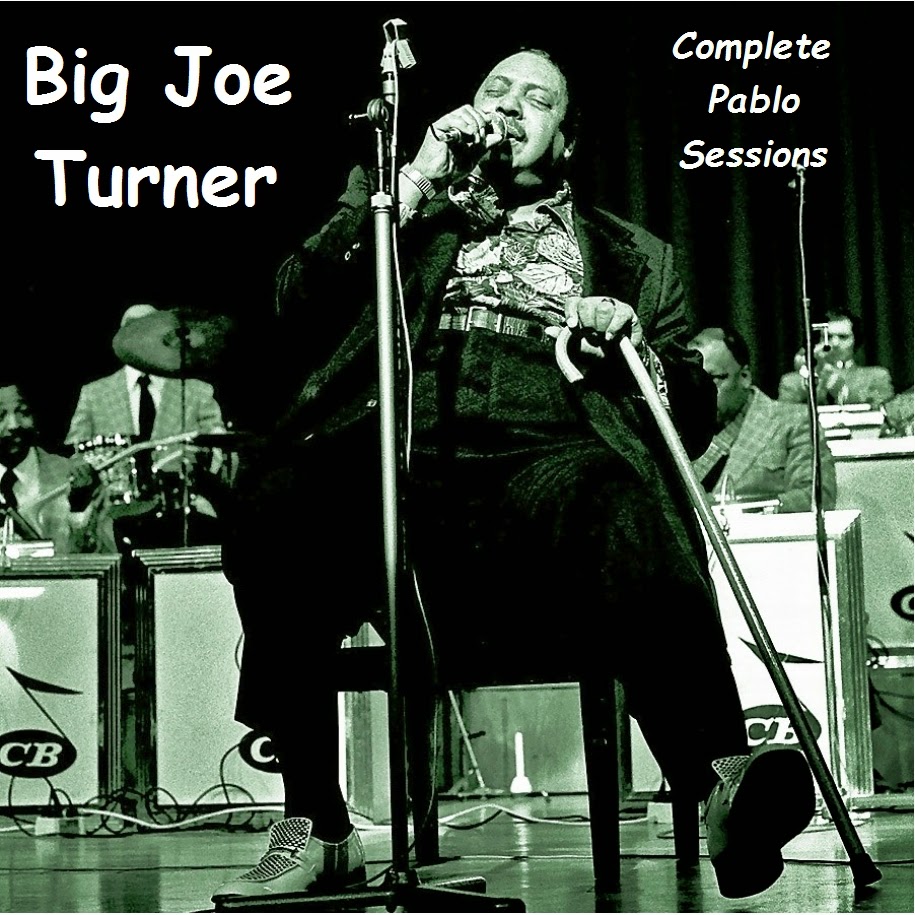
BIG JOE TURNER/ Late Sessions


BIG JOE TURNER/ Late Sessions


Quand Big Joe Turner (1911-85) enregistre pour Norman Granz, il est quelque peu oublié. Pionnier du blues de Kansas City, partie prenante de la folie du boogie woogie dans les années 30 auprès de Pete Johnson, chanteur ultra puissant archétype des Blues Shouters, Joe est le chanteur des grands orchestres de Benny Moten, Andy Kirk, Count Basie avant d'enregistrer en vedette du R&B une oeuvre copieuse pour de nombreux labels. Très avisé, superbe showman, Big Joe va savoir maintenir intacte sa popularité longtemps. Il est d'ailleurs un des rares artistes noirs du R&Blues capable de s'arrimer au courant du Rock n'Roll. Il signe sur le label Atlantic en 1951 qui l'entoure des meilleurs musiciens du moment, le produit intelligemment et distribue ses disques dans toute l'Amérique. Shake, rattle and roll; Flip, flop and fly et Teenage letter obtiennent autant de succès dans les Hit Parades "Rhythm & Blues" que "pop" et son nom est associé aux stars adolescentes du Rock'n'roll!, notamment dans plusieurs films.
            Mais dans les années 60, Big Joe apparaît largement comme une figure du passé. Il essaie de s'adapter aux goûts du blues revival mais, malgré la très grande qualité de ses disques (magnifique album Kent avec George Smith!), sa manière d'être et de chanter ne plaisent guère à ce nouveau public qui ne jure plus que par les bluesmen du Delta ou ceux du ghetto de Chicago.
            Big Joe s'installe alors en Californie et apparaît surtout dans des festivals de jazz et de façon irrégulière dans les clubs de Los Angeles. Lorsque le producteur de jazz Norman Granz, après une éclipse forcée, décide de relancer son label Pablo et de reprendre des tournées internationales de big bands, il pense en premier à Count Basie à qui il adjoint Big Joe Turner. Le succès de cette tournée au printemps 1972 est tel que Granz décide d'enregistrer live le concert parisien et de le sortir sur Pablo.
            Les dés sont lancés: Joe Turner revient à son rôle favori de blues shouter et, devenu très ami avec Granz, il va enregistrer pas moins de neuf autres albums pour Pablo entre 1972 et 78, entouré de certains des noms les plus prestigieux du jazz. Si l'album The Bosses (avec Count Basie mais en studio) recueille de bonnes critiques, les autres sont très fraîchement accueillis, notamment par les critiques de blues qui soulignent l'absence de nouveau répertoire, les solos très longs, les morceaux étirés, les disques enregistrés en très peu de temps. Joe n'est pas non plus toujours dans une grande forme. Sa santé se détériore beaucoup durant cette période et il ne se déplace plus que difficilement et à l'aide d'une canne.
            Malgré tout, ces disques prennent avec le temps une autre dimension: ils réunissent de grands musiciens qui ont marqué l'histoire et qui ont d'évidence du plaisir à se retrouver ensemble. Et finalement, ce long corpus permet à Big Joe Turner, un des plus grands noms de l'histoire du blues, d'ajouter - presque en fin de carrière - une nouvelle pierre solide à sa longue et riche oeuvre.
            La plupart de ces LPs sont aujourd'hui introuvables et nous remercions tous ceux qui ont permis de les rassembler ici: Marc (Fr), Hartmut Münnich, Kempen, Steve 626...
                                                                       Gérard HERZHAFT

            When Big Joe Turner (1911-85) began his series of recordings for Norman Granz' rejuvenated Pablo label, he was a little bit forgotten. Pioneer of the Kansas City blues, linked with the boogie woogie craze of the 1930's, particularly with his fellow Pete Johnson, Joe is a consummate showman and an ultra-powerful blues shouter with the big bands of Andy Kirk, Benny Moten or Count Basie before launching a personal career as a major name of the R&B, heavily recording for numerous labels. Moreover, when signing with the Atlantic label in 1951, Joe became one of the few black R&B star to be able to crossover in the emerging Rock'n'roll field, singing before audience of teenagers, appearing in many R'n'R movies and placing records like Shake, rattle and roll; Flip, flop and fly or Teenage letter into the Tops 40 of R&B as well as Pop!
            But in the 60's, Big Joe seems to be a figure of the past. He tries to cope with the tastes of the new Blues Revival audiences, waxing excellent deep blues albums (one with George Smith) but he was not the Delta or the Chicago ghetto bluesman that this public wanted exclusively at that time.
            Big Joe comes to live in California and appears irregularly on jazz festivals and L.A. clubs. When in 1972 producer and former civic rights activist Norman Granz decided to launch a big band tour of Europe, he chose to reunite old Kansas City partners, Count Basie and his Orchestra with blues shouter Big Joe Turner. The tour proved to be so successful that Granz recorded live the Paris concert and issued it on his Pablo label. This started a new association between Turner and Granz that gave nine subsequent LP's until 1978! Joe is once again the blues shouter supreme surrounded by some of the biggest and most respected jazzmen still working then. But if The Bosses (with Count Basie) has some good reviews, the other albums are mildly welcomed, particularly by blues critics who point out the lack of new material, the overlong numbers and solos, the quickly recorded sessions and sometimes a lacking of rehearsal... Joe's health is also declining and it shows sometimes in his voice.
            Anyway, the passing years give those LPs a better significance: they brought together great musicians (and some of the greatest) who evidently enjoyed playing with each other and at last those late sessions are a welcomed addition to the recording works of one of the true giants of the blues.
            Most of those records are unavailable today, sometimes very hard to find and all those who have made possible this project must be thanked: Marc (Fr) particularly, Hartmut Münnich, Kempen, Steve 626..

                                      Gérard HERZHAFT