Nombre total de pages vues

mardi 25 septembre 2018

LOS ANGELES BLUES/ Volume 2


LOS ANGELES BLUES/ Volume 2

           
Le chanteur et pianiste (et non guitariste comme indiqué dans Blues Discography) Memphis Eddie, appelé aussi Memphis Eddie Pee est en fait né Eddie P. Johnson à Hughes (Arkansas) le 16 avril 1919 et décédé à Los Angeles le 16 juin 1963. Il demeure presque inconnu bien qu'il ait substantiellement enregistré pour Globe, Foto et RPM entre 1945 et 1950. J'ai essayé de regrouper tous ses titres mais il m'en manque encore plusieurs (merci d'avance à ceux qui posséderaient une copie de ces raretés en rouge dans la disco).
(cf les commentaires pour entendre quatre titres ici absents. Merci à hwolf et Mike Kradenac!)

            Le chanteur, violoniste, guitariste, pianiste Don "Sugarcane" Harris est évidemment beaucoup plus connu. Né le 18 juin 1938 à Pasadena (Californie), il apprend le violon auprès du bluesman L.C. Robinson. Encore lycéen, Don et son ami Dewey Terry chantent au sein du groupe doo-woop The Squires et enregistrent dès 1954 (Lucy Lou). Don & Dewey développent alors une carrière en vedette, chantant à l'unisson, jouant guitare et piano. Ils enchaînant les petits succès pour le label Specialty (Jungle Hop) durant quelques années entre 1957 et 1959. Don Harris (surnommé
Sugarcane par Johnny Otis) est beaucoup plus tourné vers le blues que Dewey et il grave en vedette une petite série de 45t, superbes instrumentaux blues au violon. Après s'être séparé de Dewey Terry, Sugarcane va jouer dans les orchestres de Harvey Mandel, Frank Zappa, Johnny Otis, Pure Food & Drug Act et surtout John Mayall avec lequel il signe plusieurs superbes solos sur les albums USA Union et Back to the Roots. Il enregistre aussi plusieurs albums sous son nom dans un style plus tourné vers le jazz avant-garde (il fera même un album en duo avec Jean Luc Ponty). Il décède d'une embolie pulmonaire à Los Angeles le 30 novembre 1999.

            Le trompettiste et chanteur Russell Jacquet (Robert Russell Joseph Jacquet), frère aîné du célèbre jazzman Illinois Jacquet, est né le 4 décembre 1917 à Saint Martinsville (Louisiane). Il a étudié la musique à la Texas Southern University avant de suivre son frère en Californie et de jouer dans son orchestre. Il a dirigé son propre orchestre durant quelques années (1945-49) qui présentait aussi la chanteuse Numa Lee Davis, jouant régulièrement au Cotton Club à Hollywood. Il a alors enregistré une petite oeuvre sous son nom entre blues et jazz, très typique de ce qu'on entendait à L.A. durant les années de l'immédiate après-guerre. Russell a par la suite rejoint l'orchestre de son frère puis avec divers autres groupes dont celui d'Arnett Cobb. Il est décédé le 7 mars 1990 à Los Angeles.

                                                                       Gérard Herzhaft

            Pianist (and not guitarist as it is written in Blues Discography) Memphis Eddie, also called Memphis Eddie Pee is in fact Eddie P. Johnson, born in Hughes (Ark) 16 April 1919 and dying in Los Angeles on 16th June 1963. He remains an almost unknown although he has recorded several 78s for Globe, Foto and RPM between 1945 and 1950. I have tried to gather all his sides but I'm still missing several (thanks to everyone who would have a copy of those and would will to share) (cf comments for listening four more titles by Memphis Eddie, thanks to hwolf and Mike Kradenac)

            Singer, violonist, guitarist and piano player Don "Sugarcane" Harris is of course much better known. Born on 18 June 1938 in Pasadena (Ca), he learned violin with bluesman L.C. Robinson. With his high school pal Dewey Terry they joined, still teenagers, a local doo woop group, The Squires with which they recorded as early as 1954 (Lucy Lou). Under the name Don & Dewey they formed a duo, singing together and playing various instruments. They enjoyed several small hits with the Specialty label between 1957 and 1959 (Jungle Hop). Don Harris (nicknamed Sugarcane by Johnny Otis) is much more blues oriented than Dewey. He recorded a handful of 45s under his name, mainly a string of superb violin instrumentals. After leaving Dewey, Sugarcane played in several bands with Harvey Mandel, Frank Zappa, Johnny Otis, Pure Food & Drug Act and moreover inside John Mayall's Bluesbreakers with whom he will tour for a couple of years and record several wonderful violin blues solos on the Mayall's albums USA Union and Back to the Roots. After that, Don will record albums under his name in a style much more progressive jazz oriented (he even will cut an album with Jean Luc Ponty). Don died of blood clot in his lung in Los Angeles, 30 November 1999.
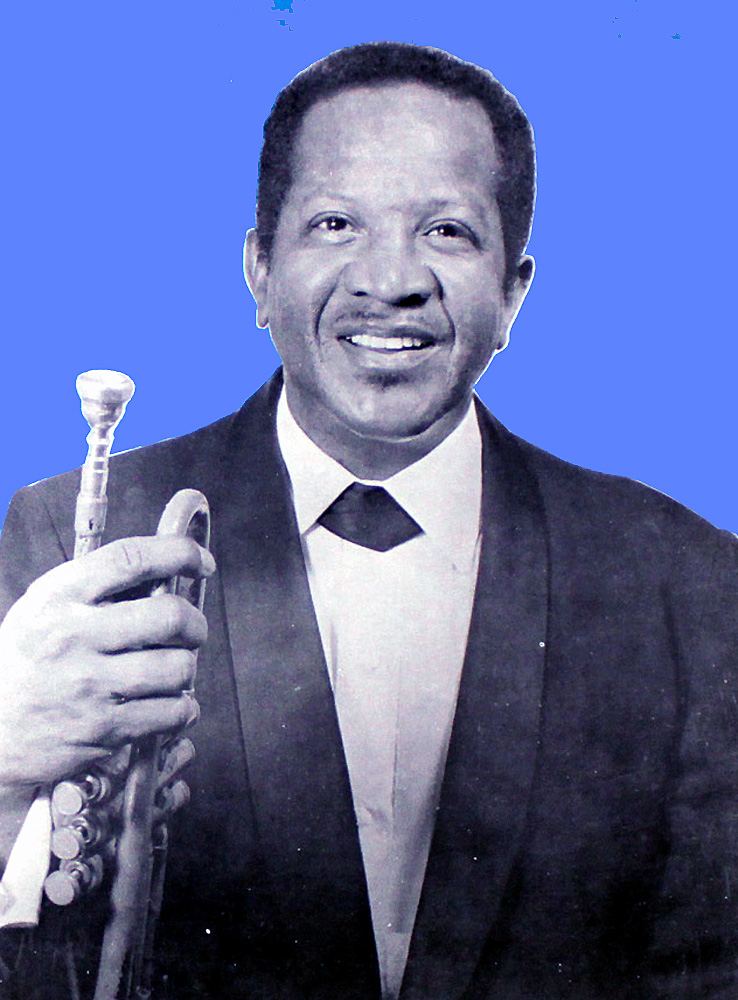
           
Singer and trumpet player Russell Jacquet (Robert Russell Joseph Jacquet) is the elder brother of famous jazzman Illinois Jacquet. Russell was born 4 December 1917 in Saint Martinsville (La), studied music at Texs Southern University before following his brother to Los Angeles and playing in his orchestra. Between 1945 and 1949, he formed his own band which featured female singer Numa Lee Davis, playing regularly at Hollywood's Old Cotton Club and recording several sides, quite typical of the Los Angeles jazz/blues scene of the immediate post war years. After 1950, Russell joined again Illinois' band and also played with several other small bands (namely Arnett Cobb's). Russell died in Los Angeles 7th March 1990.

                                                                       Gérard HERZHAFT


MEMPHIS EDDIE (Eddie P. Johnson Jr), vcl; William Bates, a-sax; Prince Albert, pno; band. Los Angeles, Ca. juin 1945
01. Mistreated all the time
Going back to Smoky Mountain
Memphis Eddie, vcl/g; Prince Albert, pno; William Bates, a-sax; band. juillet 1945
Big leg mama (thanks to hwolf and Mike Kredinac for sharing this one)
My house fell down  (thanks to hwolf and Mike Kredinac for sharing this one)
Memphis Eddie, vcl/pno; g; bs. Los Angeles, Ca. décembre 1947
02. Trouble blues
03. Hep chick
Memphis Eddie, vcl/pno; band. Los Angeles, Ca. 25 mai 1950
04. Velma Lee
05. Lonesome change
Mercy blues  (thanks to hwolf and Mike Kredinac for sharing this one)
I believe  (thanks to hwolf and Mike Kredinac for sharing this one)
Memphis Eddie, vcl/pno; band. Los Angeles, Ca. 26 septembre 1950
06. Good time woman
07. Highway 61
08. Real fine girl
09. Baby Lou
DON "SUGARCANE" HARRIS, vcl/fdl/g; Dewey Terry, pno/vcls; Adolphus Alsbrook, bs; Ray Martinez, dms. Los Angeles, Ca. 1956
10. Fiddlin' the blues
11. Slummin'
12. My heart is aching
13. Miss Sue
Don "Sugarcane" Harris, vcl/fdl; Joe Wilson, tpt; Jackie Kelso, a-sax; Dewey Terry, pno; Mel Brown, g; bs; dms. Los Angeles, Ca. 1960
14. They say you never can miss
15. Elim stole my baby
Don 'Sugarcane' Harris, vcl/fdl; Dewey Terry, g/og/vcls; Pete Smith, bs; Sonny Gillette, dms. Los Angeles, Ca. 1962
16. Soul motion
17. Stretchin' out
18. Heart attack
Don't ever leave me (thanks to Tom Thumb for sharing this one)
RUSSELL JACQUET, vcl/tpt; Calvin Boaz, tpt; Teddy Edwards, a-sax; Maurice Simon, t-sax; Arthur Dennis, b-sax; Bill Davis, pno; Charles Mingus, bs; Chico Hamilton, dms. Los Angeles, janvier 1945
19. Penny's worth of boogie
20. Look what you've done to me
Russell Jacquet, vcl/tpt; Gus Evans, a-sax; Dexter Gordon, t-sax; Arthur Dennis, b-sax; Jimmy Bunn, pno; Leo Blevins, g; Herman Washington, bs; Chico Hamilton, dms. Los Angeles, Ca. 21 septembre 1946
21. Blues a la Russ I, II & III
22. Side saddle blues
Russell Jacquet, vcl/tpt; Gerald Wilson, tpt; Snooky Young, tpt; Ted Donnelly, tb; Preston Love, a-sax; Willie Smith, a-sax; Ilinois Jacquet, t-sax; Lucky Thompson, t-sax; Bill Doggett, pno; Freddie Green, g; Billy Hadnott, bs; Al Wichard, dms. Los Angeles, Ca. décembre 1946
23. Blues
24. Mean and evil world


vendredi 7 septembre 2018

ROBERT PETE WILLIAMS/ Complete Early Recordings 1959-63


ROBERT PETE WILLIAMS/ Complete Early Recordings 1959-63


            Lorsque l'ethnomusicologue Harry Oster pénètre en 1958 dans le pénitencier d'Angola pour enregistrer des chants de prisonniers, il ne s'attend pas à trouver un artiste de la stature de Robert Pete Williams. Qui y purgeait une peine de prison à perpétuité pour meurtre et n'avait jamais imaginé de devenir musicien professionnel.
            C'est un talent majeur que Oster découvre au pénitencier! La musique de Robert Pete Williams (né à Zachary, Louisiane le 14 mars 1914) - même si dès ses débuts on note une certaine influence de certains grands bluesmen texans comme Lil Son Jackson - est largement originale car il a toujours vécu sans électricité et donc sans disque ni radio. Le timbre impassible de sa voix cache une flamme surgissante et il utilise sa guitare presque toujours en accord ouvert de ré mineur, tisse une trame rythmique complexe, à la limite de la dissonance. Au mieux de sa forme, il est extraordinaire: sommets d'émotion, textes improvisés d'un grand lyrisme. Oster enregistre à Angola certaines des plus belles séances de l'histoire du blues des années 1959-63 comme avec les longs poèmes de désespoir Letter from Penitentiary ou surtout Prisoner's talking blues qui émouvra tant Big Joe Williams, pourtant loin d'un cœur tendre, qu'il dictera une réponse envoyée par lettre à Robert Pete!
            Robert Pete Williams est, quelques années plus tard, libéré sur parole grâce aux efforts d'Oster et assigné à résidence chez un fermier de Louisiane. Il enregistre alors plusieurs albums, est enfin autorisé à participer aux grands festivals comme Newport en 1964 puis l'American Folk blues festival en 1966. Le public découvre avec étonnement cet inconnu qui interprète avec une passion débordante un blues intense. Tout en continuant à travailler dans sa ferme, Williams joue alors régulièrement et sur une base professionnelle. Il rencontre ainsi de nombreux autres bluesmen comme Johnny Shines, Big Joe Williams, Sleepy John Estes... Ceux-ci l'influencent et sa musique change alors substantiellement de nature, se discipline, s'ouvre aux grands styles de blues mais perd parfois une partie de sa puissance dramatique.
            Après sa libération, tout en vivant largement de son métier de ferrailleur, Robert Pete n'a pas cessé de tourner dans les grands festivals du monde entier, d'enregistrer des albums aux USA et en Europe. Cette carrière de musicien reconnu et apprécié lui a apporté une visible sérénité d'esprit. Il décède le 31 décembre 1980 à Rosedale, Louisiane.
            Ses meilleurs enregistrements demeurent ses premiers, véritables chefs d'œuvre, remplis d'une atmosphère tragique et oppressante, souvent d'une qualité émotionnelle exceptionnelle. Beaucoup de ces morceaux étaient devenus extrêmement difficiles à trouver. A l'exception d'un nombre de morceaux toujours inédits (hélas encore assez importants!), nous avons réussi à rassembler tous ceux qui, enregistrés entre 1959 et 1963, ont fait à un moment donné l'objet d'une parution ainsi qu'une poignée d'inédits, ce qui permet d'apprécier pour la première fois la superbe musique de ce grand bluesman.
            Nos plus vifs remerciements pour leur aide à la réalisation de ce projet vont à Klaus Killian, Brian Pounders, Alan Braun et Xyros.
                                                                       Gérard HERZHAFT

            When ethnomusicologist Harry Oster entered at the end of 1958 the Angola's Penitentiary researching folk and blues talents among the inmates, he probably didn't expect to meet such a major artist like Robert Pete Williams who was there serving a life sentence for murder!
            Robert Pete Williams (born 14th March 1914 at Zachary, La)'s music was strikingly original and moving beyond anything else Oster had heard before during his collecting jobs. Although his guitar playing and impassionate singing styles reveals some influences from Texas popular bluesmen like Lil'Son Jackson, Robert Pete's music was then essentially his own. He had always lived out in the country as a sharecropper, in a shack without electricity (and no radio or records player) and the few gigs he played were strictly in his vicinities. He almost always plays his guitar with an open chord (of D, most of the time), weaving a complex weft sometimes almost jangly that didn't please every blues and jazz critics at first. And his blues, mostly improvised on the spot (he said he was just catching lyrics in the air while playing) are at best absolutely extraordinary and never less than very good. Between 1959 and 1963, Harry Oster will record some of the most moving blues of that era, like Letter from the penitentiary or Prisoner's talking blues which will move so much a Big Joe Williams (certainly not a soft heart!) that the bluesman will dictate a letter for Robert Pete and send him to the Penitentiary!
            Thanks to Oster's continuous efforts and after many false attempts, Robert Pete Williams is released on parole but still under house arrest to a Louisiana's farmer. There he records again many wonderful field sessions. At last he is freed and he may then travels and appears at main blues festivals like Newport 1964 or Europe on the AFBF 1966 tour, playing before a huge audience of blues, folk and jazz fans stunned by this real deep bluesman largely hitherto unknown!
            While making a living as a scrap metal dealer and a farmer, Robert Pete will by now regularly tour across the USA and abroad, making enough money to buy his own land and also meeting and playing alongside other bluesmen like Johnny Shines, Big Joe Williams, Sleepy John Estes... He absorbs some of their musical styles and thus his music changes substantially, becoming more disciplined, less original and sometimes losing some of its dramatic power. During the late 1960's and 1970's Williams will record many albums and this musical recognition brings him a visible real peace of mind. He dies on 31 December 1980 at Rosedale, La.
            His very best recordings are his first, field recordings made in Angola's pen or while on parole in a nearby farm between 1959 and 1963. They are full of masterpieces filled with a gripping tragic atmosphere. Many of those early recordings had become very hard to find and just hear. With the exception of a (unfortunately large) number of still unissued titles laying on some vaults, we have here gathered all of those recordings which appeared on LPs or even a rare 45 during this period plus a handful of hitherto unissued tracks. It is thus more easy to fully appreciate the superb music of this major bluesman.
            Our heartfelt thanks for their great help to Klaus Killian, Brian Pounders, Alan Braun and Xyros among others.
                                                           Gérard Herzhaft


mercredi 29 août 2018

TEXAS BLUES/ Volume 7


TEXAS BLUES/ Volume 7

           
Pour ce 7ème opus de notre série Texas blues, mettons les projecteurs sur trois obscurs artistes texans qui nous laissent malgré tout des œuvres enregistrées intéressantes.

            Calvin "Loudmouth" Johnson chantait dans les juke joints autour de Houston durant la fin des années 50 et les années 1960. Il semble avoir dirigé un petit orchestre qui comprenait le guitariste D.C. Bender (cf Texas blues/ Vol. 6) avec lequel il a enregistré un 45t autoproduit en 1964 qu'il vendait durant ses concerts.
            Calvin est découvert par le producteur texan Roy Ames vers 1965 alors qu'il vivait de sa petite échoppe de ferrailleur. Ames l'enregistre à plusieurs reprises, notamment en 1967, une première séance avec ce qui est son orchestre régulier. Mais le résultat est si catastrophique que Ames décide de reprendre tout, fait venir son protégé d'alors Johnny Winter (qu'il avait aussi découvert et promu) plus des musiciens aguerris et, durant trois jours, enregistre dans ce contexte 14 titres chantés par Calvin Loudmouth Johnson. Lien on your body (Mortgage on your soul) paraît en 45t et connaît un certain succès local, se vendant à plusieurs milliers d'exemplaires. On retrouve Johnson la décennie suivante dans les bars de Houston, chantant et jouant de la basse au sein d'un groupe de blues local, The Ministers of Sinisters qui comprend l'harmoniciste Mike Wesolowsky et le batteur Russ Wilson. On ne connaît ni les dates de naissance ni de décès éventuel (et probable) de ce chanteur texan intéressant.

            On ne connaît guère de choses du batteur et chanteur Silver (John) Cooks, le frère du bassiste Don Cooks, sauf qu'il a enregistré avec Edgar Blanchard et Papa Lightfoot. C'est d'ailleurs avec eux (et l'excellent Tommy Ridgley au piano) qu'il a gravé son seul 45t en tant que leader.

            Le chanteur Jesse Lockett était très présent dans les clubs du Third Ward de Houston durant les années 1940 durant lesquelles il a enregistré quatre 45t, révélant un blues shouter convaincant. Il avait cependant en 1939 déjà enregistré un fragment de titre pour John Lomax alors qu'il purgeait une peine de prison au pénitencier de Brazorias, un excellent country blues dans lequel il joue de la guitare et chante dans le plus pur style texan. Le journal "The Houston Informer" le signale en juillet 1943 jouant au Lincoln Theatre ("Jesse Lockett, the blues shouter and composer, has returned to the Lincoln Theatre stage show after filling an engagement at the exclusive ofay nitery on the outskirts of town. Returning on the zoom, Lockett has knocked up some more of his low down numbers and (is) really blowing his tops."). Et son dernier 45t, paru en janvier 1949, est également chroniqué dans le même journal par John Thompson avec des phrases assez élogieuses: “Jesse Lockett, hefty blues singer, who is a native Houstonian, has returned to the city from California, where he went to cut a few records. Jesse is still doing the blues and his latest, which should get somewhere, is 'Run Little Rabbit Run' (sic ). A catchy tune with lots of blues tempo it still has a bit of be-bop. Have him sing it when you see him.” 
Plus loin dans la même chronique; John Thompson note la présence de l'orchestre de Will Rowland qui accompagne Lockett:
“Listen to the traveling band of Will Rowland, who came to Houston via Beaumont from Los Angeles. A seven piece combo, the band did jump a little but not in the class of recent small bands heard here. One of those fine girls (of the Jane Russell type). Elsie Jones, entertained with the group.
            On ne sait pas ce qu'est ensuite devenu Jesse Lockett. Nous avons réussi à regrouper presque la totalité de son œuvre enregistrée (à l'exception du seul Blacker the berry).
            Tous nos remerciements pour leur aide à Cesare Malagodi, l'excellent blog Wired for Sound ainsi que le regretté Roy C. Ames avec lequel j'ai eu une longue correspondance durant les années 1970.
                                                                       Gérard Herzhaft

            This 7th Opus of our Texas Blues series brings to the fore three quite obscure Texas bluesmen who, nevertheless, leave us some quite interesting records.
           
            Calvin "Loudmouth" Johnson was singing in the Houston area juke joints during the late 1950's and 60's. He seems to have lead a small band with guitarist D.C. Bender (cf Texas blues/ Vol. 6) with whom he recorded a self produced 45 which he was selling from the bandstand.
            Calvin was "discovered" by producer Roy Ames around 1965 while he was mostly making a living from scrap dealing. Ames recorded him several times, particularly in 1967, first a session with his own band of friends. But the results were so awful that Roy decided to start back the whole affair, this time with his own protégé (and also discovery) Johnny Winter plus some good local musicians during a three days session that gave an excellent reworking of Lien on your body (Mortgage on your soul) that became soon a small local hit. The following years, Johnson is reported singing and playing bass at Houston venues with a group named The Ministers of Sinisters with Mike "Wezo" Wesolowsky at the harmonica and Russ Wilson on the drums... We unfortunately don't know when Calvin was born and when he (probably) died and where he was buried.

            Drummer (and singer) Silver (John) Cooks, probably the brother of bassist Don Cooks, is just a name, possibly from New Orleans. He has recorded behind Edgar Blanchard and Papa Lightfoot and under his name only one excellent single.

            Houston singer Jesse Lockett was playing regularly in the clubs of Houston's Third Ward during the 1940's, even issuing four 45s that shows a very convincing Texas blues belter. He had previously recorded half a track (unfortunately cut short by probably technical problems) in 1939 for John Lomax while he was serving a prison sentence at the Brazorias Penitentiary. The track is an excellent country blues where Jesse plays an unmistakable Texas guitar style. Local newspaper The Houston Informer wrote on July 31, 1943, that "Jesse Lockett, the blues shouter and composer, has returned to the Lincoln Theatre stage show after filling an engagement at the exclusive ofay nitery on the outskirts of town. Returning on the zoom, Lockett has knocked up some more of his low down numbers and (is) really blowing his tops.". And his last single, issued in January 1949, is also reported in the same paper by columnist  John "Sid" Thompson with some laudatory comments: “Jesse Lockett, hefty blues singer, who is a native Houstonian, has returned to the city from California, where he went to cut a few records. Jesse is still doing the blues and his latest, which should get somewhere, is 'Run Little Rabbit Run' (sic ). A catchy tune with lots of blues tempo it still has a bit of be-bop. Have him sing it when you see him.” Elsewhere in the column, Sid notes the presence of an out-of-town band, Will Rowland, but doesn't specify that they were the backing band on "Rabbit": “Listen to the traveling band of Will Rowland, who came to Houston via Beaumont from Los Angeles. A seven piece combo, the band did jump a little but not in the class of recent small bands heard here. One of those fine girls (of the Jane Russell type). Elsie Jones, entertained with the group.”
            We have unfortunately no idea of the whereabouts of Jesse Lockett who seems to have vanished during the early 50's. We have been able to gather all his recordings minus one title (Blacker the berry).
            A lot of thanks to Cesare Malagodi, the excellent blog about Texas records labels Wired for Sound and the late Roy C. Ames with whom we had quite a long correspondance during the 1970's.
                                                                       Gérard HERZHAFT


TEXAS BLUES/ Volume 7
CALVIN "LOUDMOUTH" JOHNSON, vcl/g; D. C. Bender, g; bs; dms. Houston, Tx. March 1964
01. Lien on your body 1964
02. Unsatisfied mind 1964
Calvin "Loudmouth" Johnson, vcl/g/hca; band. Houston, Tx. 23 June 1965
03. Lost you baby
Calvin "Loudmouth" Johnson, vcl/g/hca; Johnny Winter, g; band. Houston, Tx. 17 May 1967
04. Lien on your body (Mortgage on your soul)
05. Unsatisfied mind 1967
06. Late on blues
07. They call me Loudmouth
08. Once I had a woman
09. Take my choice
10. Unwelcome in your town
11. Gangster of love
12. Alone in my bedroom
13. Hootchie Cootchie man
14. Moth Balls
15. She's mine
16. Rock me baby
17. Down and out
SILVER COOKS (John Cooks), vcl/dms; Papa Lightfoot, hca; Tommy Ridgley, pno; Edgar Blanchard, g; Don Cooks, bs. Houston, Tx. 1949
18. Coming back home
19. Mr Ticket Agent
JESSE LOCKETT, vcl/g. Brazoria, Tx. 16 April 1939
20. Worry blues
Jesse Lockett, vcl; Earl Sims, a-sax; Jimmy Moorman, tpt; Doc Jones, t-sax; Laurence Robinson, pno; C. Lechugo, bs; Felix Gross, dms. Los Angeles, Ca. 1946
21. Hole in the wall
22. Mellow hour blues
23. Boogie woogie mama (prob. alt. take to Hole in the wall)
Blacker the berry
Jesse Lockett, vcl; Will Rowland, a-sax; band. Houston, Tx. January 1949
24. Reefer blues
25. Don't lose your mind
26. Run rabbit run
27. Cold blooded woman


lundi 13 août 2018

PINEY BROWN


PINEY BROWN


            Moins connu que Big Joe Turner ou Wynonie Harris, ses modèles, Piney Brown n'en est pas moins un blues shouter de talent et qui a enregistré une oeuvre conséquente s'étendant sur cinq décennies!
            Colombus Perry naît le 20 janvier 1922 à Birmingham, la plus grande ville de l'Alabama. Elevé par sa mère qui faisait des ménages, vivant en milieu urbain, Colombus commence à chanter dans un groupe de Gospel The Young Blue Jays tout en fréquentant les spectacles de Vaudeville et les Tent shows avec assiduité. C'est une des vedettes de ce circuit alors si populaire, Shepherd Sam, qui lui apprend le mêtier, à danser, chanter, bonimenter, faire des acrobaties.
            Après divers jobs, Colombus s'installe brièvement à Kansas City où il a l'occasion de voir les blues shouters et les musiciens de la ville en action. Il gagne ensuite Baltimore en 1940 où il danse et chante dans différents cabarets du grand port et réussit à remplacer au pied levé Wynonie Harris, malade, dont il connaît par coeur le répertoire au Royal Theatre, accompagné de l'orchestre de Lucky Millinder.
            En 1946, il forme un duo de chant et de danse avec Estelle Young. Elle se fait appeler Caldonia (en hommage au tube de Louis Jordan). Lui prend alors le nom de Piney Brown, un hit de Big Joe Turner d'après le nom d'un barman bien connu de Kansas City.
            Le duo connaît un certain succès et Piney Brown tourne alors à travers tout les Etats Unis, à l'affiche avec Billy Eckstine, Gatemouth Brown, Percy Mayfield, Lester Young et même.... Big Joe Turner qui le reçoit d'abord fraîchement à cause de son nom de scène!
           
C'est en 1947 que Piney Brown fait ses débuts en studio grâce au pianiste Sonny Thompson qu'il a justement rencontré en tournée. Ce disque donne la possibilité à Brown de signer un contrat avec le prestigieux label Apollo de New York (de Bess Berman). My baby's gone effleure les Hit Parades de R&B et permet à Piney Brown de se produire à l'Apollo Theatre de Harlem, dans les principaux night clubs du pays (comme le Cotton Club) et d'effectuer une fructueuse tournée dans les bases militaires américaines, accompagné de l'orchestre d'Illinois Jacquet. Les années suivantes, Brown est constamment en studio, enregistrant pour Sittin' In With, Atlas, Prestige, Jubilee, Mad et King dont il devient aussi un compositeur maison. C'est dans ce cadre qu'il signe Popcorn, le célèbre succès de James Brown.
            Après avoir essayé de diriger un club à Kansas City (et avoir fini une balle perdue dans le dos!), Piney Brown retourne à Birmingham pour s'occuper de sa mère souffrante. Il y enregistre pour le label Heart et aide la carrière de Jerry Mc Cain.
            En 1964, Piney se marie et s'installe définitivement à Dayton dans l'Ohio où il se produit régulièrement au club The Village et à la base militaire voisine de l'US Air Force, tout en enregistrant pour le petit label local, Deep Groove. Le Rhythm & Blues n'ayant plus guère la faveur des jeunes Noirs, Piney favorise de plus en plus dans sa musique la Soul et le Funk, copie James Brown avec Everything but you avant d'enregistrer une longue séance pour le label 77 de John Richbourg à Nashville, accompagné d'un orchestre de Country Music!
            Lorsque Delmark réédite ses séances Jubilee, Piney Brown contacte le label pour ses droits d'auteur et est ainsi signalé aux amateurs de blues. Après que la revue britannique Juke Blues lui ait consacré un long article/interview, Piney Brown tourne en Europe, enregistre deux albums en 2004-2005, doit en faire un troisième pour Delmark. Mais il décède avant de réaliser ce projet le 5 février 2009 à Dayton.
            Nous avons ici regroupé presque la totalité des enregistrements de Piney Brown effectués entre 1947 et 1959 plus une sélection de ses titres les plus blues de la décennie suivante.
            Merci à Jollyjumper, Uncle Gil et Steve Wisner pour leur aide déterminante. Et merci aussi à Brian Baumgatner pour son article paru dans Juke Blues 48 que nous avons beaucoup utilisé pour cet article.
                                                                       Gérard HERZHAFT

            Less famous than Big Joe Turner or Wynonie Harris, his favorites, Piney Brown is anayway a gifted blue shouter who recorded a long string of singles and CDs, spanning a career of five decades!
            Colombus Perry was born on 20 January 1922 in Birmingham, Alabama. Raised by his mother who was a housekeeper, the young boy started to sing in a Gospel group The Young Blue Jays while attending a lot of Vaudeville and Tent Shows. There he met the famous Vaudeville artist Shepherd Sam who taught him how to dance, sing, tell tales, acrobatics...
            At the end of the 1930's, Colombus tried his luck in Kansas City with no success but he had there the opportunity to watch and meet many of the blues and jazz acts of the time. He then went to Baltimore around 1940, singing and dancing in several night clubs of this big harbor. He even replaced at the Royal Theatre and backed by the Lucky Millinder Orchestra, an ill Wynonie Harris from who he knew all the songs!
            In 1946, he formed a singing and dancing duo with Estelle Young. Estelle took the stage name of Caldonia (cashing on Louis Jordan's hit) and Colombus Perry became Piney Brown, the title of a smash hit by Big Joe Turner about a famous Kansas City bartender! The duo enjoyed some success and Piney Brown started to tour across the USA with several shows, sharing the bill with Billy Eckstine, Gatemouth Brown, Percy Mayfield, Lester Young and even a very suspicious (at first) Big Joe Turner! Thanks to Sonny Thompson, Piney made his recording debut in 1947 for Miracle, enough to be invited to make a session the next year at New York for the prestigious Apollo label of Bess Berman. My baby's gone enjoyed some success and Piney appeared at many famous clubs and venues like the Apollo Theatre, the Cotton Club, while embarking of several tours of US Military bases. He was also regularly on the studios, recording for Sittin' In With, Atlas, Jubilee, Mad and King which also hired him as a composer. While at King, Piney Brown gave the hit Popcorn to James Brown!
            After an unsuccesful attempt to own a night club in Kansas City (and a bullett in his back!), Piney had to come back to Birmingham to help his aging mother. Then he recorded for the Heart label and helped launch Jerry McCain career. In 1964, Piney finally settled down permanently in Dayton (Ohio) where he married, singing at local clubs (The Village) or US Air Force bases while still recording for the small Dayton label, Deep Groove in a style more and more leaning towards Soul and Funk (Everything but you). During the late 1960's Piney also recorded several sessions for John Richbourg's 77 label in Nashville, backed by a young Country band.
            When Delmark reissued his Jubilee tracks, Piney contacted the Chicago label for his royalties. Delmark spread the news among blues buffs around the world and after a lengthy article and interview on the british Juke Blues magazine, Piney embarked himself on several tours of Europe, recording two CDs in 2004-2005. Another album was programmed for Delmark but Piney Brown died before on 5 February 2009 in Dayton.
            We have here gathered almost all the recordings made by this important blues shouter between 1947 and 1959 plus a selection of his most bluesy tracks that he recorded in the 60's.
            A lot of thanks to Jollyjumper, Uncle Gil and Steve Wisner for their great help. And a particular thanks to Brian Baumgartner whose Juke Blues n°48's article has been strongly used here!
                                                                       Gérard HERZHAFT


Piney Brown (Colombus Perry), vcl; Eddie Chamblee, t-sax; Sonny Thompson, pno; g; bs; dms. Chicago, Ill. 25 October 1947
01. That's right, little girl
Piney Brown, vcl; band. New York City, November 1948
02. Down and out blues
03. Gloomy monday blues
04. Mourning blues
05. Piney Brown boogie
Piney Brown, vcl; band. New York City, January 1950
06. How about rockin' with me?
07. Why do I cry over you?
08. That's right baby
09. Lovin' gal blues
Piney Brown, vcl; Abe Baker, bs; band. New York City, 1951
10. You bring out the wolf in me
11. Don't pass me by
12. Battle with the bottle
13. 3D loving
Piney Brown, vcl; Blue Flashes, band. New York City, 1952
14. You made me this way
15. Talking about you
16. Have mercy
17. Kokimo
Piney Brown, vcl; Ed Swanston, pno; band. New York City, January 1953
18. Ooh I want my baby
19. My heart is aching baby
The stuff is here
So afraid of losing you
Piney Brown, vcl; Sidney Grant, t-sax; tb; Champion Jack Dupree, pno; Mickey Baker, g; Cedric Wallace, bs; John Taylor, dms. New York City, 7 April 1953
20. Whispering blues
21. Walk a block and fall
Piney Brown, vcl; Madman Jones, t-sax; Lefty Bates, g; band. Chicago, Ill. 1959
22. Sugar in my tea
23. My love
Piney Brown, vcl; band. Dayton, Oh. 1961
24. I'm travelling
25. Life is funny
Piney Brown, vcl; band. Dayton, Oh. 1966
26. Everything but you
I'm tired of running   (Thanks to Steve Wisner for sharing this rare track)
Piney Brown, vcl; band. Nashville, Tn. 1969
27. Bring it on home
28. Baby don't do it
29. One of these days
30. Nashville wimmin'


mardi 31 juillet 2018

TEXAS BLUES/ Volume 6


TEXAS BLUES Volume 6


            Ce 6ème volume de notre série sur le Texas blues est consacré à deux musiciens fort différents, le premier représentant bien ce R&B Texan qui s'est développé durant les années de guerre et qui a été extrêmement populaire auprès des Noirs durant une bonne décennie; le deuxième le down home blues texan qui, lui, venu des pionniers du genre, perdurera longtemps dans les années 1960.

            Joe Fritz, surnommé "Papoose", sans doute pour des origines indiennes, est né à Houston le 13 novembre 1924 et a fait une carrière de saxophoniste alto et tenor et de chanteur au sein de son propre orchestre, très typique du R&B texan. On ne connaît que peu sa vie, bien qu'il ait accompagné en tournée et en studio des artistes de renom comme Junior Parker, Albert Collins ou
Huey Smith! Fritz a substantiellement enregistré sous son nom pour Modern, Sittin' In With, Peacock et pour Jet Stream jusqu'à la fin des années 60. A notre connaissance, il n'a jamais été interviewé et on connaît le lieu et la date de son décès (12 juin 1983 à Houston) par le fait qu'il était un vétéran de la Deuxième Guerre Mondiale! Quoi qu'il en soit, nous proposons ici presque toute son œuvre, quelques titres manquants encore malgré nos efforts.

            D.C. Bender (en fait Dick C. Bendy) est au contraire très profondément ancré dans le blues profond du Texas qui s'est développé dans les années 1920-30. Né à Urbana le 19 juin 1924 dans une famille de métayers, D.C. apprend la guitare avec un voisin bluesman Hardy Gibson et très jeune gagne sa vie en chantant dans les juke joints du Texas et de Louisiane ou dans les rues de Houston, rencontrant et partageant la scène avec Luther Stoneham, Smokey Hogg, Wright Holmes et surtout son cousin Sam "Lightnin'" Hopkins. C'est Hopkins qui le présente au producteur Bill Quinn en 1949, ce qui lui permet d'enregistrer deux titres seul à la guitare sous le surnom de D.C. Washington (!). Les années suivantes, Bender s'associe avec un autre bluesman local Big Son Tillis. Le duo part tenter sa chance à Los Angeles où ils enregistrent une superbe séance pour le label Elko de J.R. Fullbright en 1953. De retour à Houston, D.C. Bender rejoint le groupe du batteur Ivory Lee Semien (qui comprend le guitariste Big H. Williams) avec lequel il grave une dernière séance en 1967. Il décède le 11 août 1982 à Houston.
                                                           Gérard HERZHAFT

            This 6th opus of our Texas blues series brings two artists representing two very different styles of Texas blues.
            Joe Fritz, nicknamed "Papoose" probably for some Native American origins (?) was born in Houston 13th November 1924 and made quite a long career playing the saxophone and sometimes singing in front of his own band, very typical of the then very popular Texas R&B. His whereabouts and life are little known although he had followed on the road and in studios big Texas blues names like Junior Parker, Huey Smith and Albert Collins. Fritz has also recorded more than twenty tracks under his own name for Modern, Sittin' In With, Peacock or Jet Stream from 1950 to the late 1960's. To my knowledge, he unfortunately has never been interviewed and we know the place and the date of his death (12 June 1983 in Houston) thanks to him being a WWII veteran! Whatever, we have tried to gather all his recordings but, despite our efforts, a few are still missing.
           
On the other hand, D.C. Bender (in fact Dick C. Bendy) is deeply rooted in the down home Texas blues tradition harking back to the 1920's and Blind Lemon, Texas Alexander or Little Hat Jones. Born at Urbana 19th June 1924 from a sharecropping family, D.C. learned guitar thanks to a neighbor bluesman Hardy Gibson. At a very young age, he left the farm and made a living playing in the Texas/Louisiana juke joints or in the streets of cities like Houston, meeting and playing with other local bluesmen like Luther Stoneham, Smokey Hogg, Wright Holmes or, chiefly, with his cousin Sam Lightnin' Hopkins. This is Hopkins who brought D.C. to producer Bill Quinn who recorded him as a solo artist in 1949 under the moniker of D.C. Washington! The following years, Bender teamed with another deep local bluesman Big Son Tillis and the two tried their luck as far as Los Angeles where they recorded a first rate session for J.R. Fullbright's Elko label in 1953. Unfortunately, those records went nowhere and D.C. came back to Houston, joining drummer Ivory Lee Semien's band with whom he waxed a last session in 1967. D.C. Bender died in Houston 11th August 1982.
                                                           Gérard HERZHAFT

TEXAS BLUES
Volume 6
JOE "PAPOOSE" FRITZ, vcl/a-sax; t-sax; band. Houston, Tx. March 1950
01. Wrong doing woman
02. If I be lucky
03. Better wake up baby
04. Real fine girl
Joe "Papoose" Fritz, vcl/a-sax; Willie Johnson, pno; Goree Carter, g; Don Cooks, bs; Ben Turner, dms. Houston, Tx. September 1950
05. Please get me off your mind
06. I love you my darling
07. I'm so sorry
08. Bad bad women blues
09. I've tried not to love you
10. Lady Bear boogie
Cool cool baby blues
I do love you
Joe "Papoose" Fritz, vcl/a-sax; Goree Carter, g; Connie Mc Booker, pno; Bill Harvey, t-sax; band. Houston, Tx. December 1950
11. Please my darling
12. They were right
Joe "Papoose" Fritz, vcl/a-sax; Bill Harvey, t-sax; Goree Carter, g; band. Houston, Tx. January 1951
13. Make her see things my way
Joe "Papoose" Fritz, vcl/a-sax; band. Houston, Tx. February 1951
14. Summer's coming on
15. I'm not suspicious but
Corelle
If I didn't love you so
In misery
Joe "Papoose" Fritz, vcl/a-sax; Geno Washington, pno; James Von Streeter, t-sax; Devonia Williams, pno; Pete Lewis, g; Albert Winston, bs; Leard Bell, dms. Houston, Tx. October 1953
16. Honey honey
17. The woman I love
Joe "Papoose" Fritz, vcl/a-sax; band. Houston, Tx. 1966
18. Good doctor, sweet soul
19. Aww she's a stepper
20. I'm a stepper
D.C. BENDER, vcl/g. Houston, Tx. 10 June 1949
21. Rebop boogie
22. Happy home blues
D.C. Bender, vcl/g; Big Son Tillis, g. Los Angeles, Ca. 1953
My baby wrote me a letter
23. I'm going upstairs
24. Cold blues
D.C. Bender, vcl/g; Earl Gilliam, og; Big H. Williams, g; Ivory Lee Semien, dms. Houston, Tx. June 1967
25. Boogie Children
26. Woke up this morning
D.C. Bender, g; Big Houston Williams, bs; Ivory Lee Semien, dms. Houston, Tx. 16 juillet 1967
27. D.C.'s freeze up